


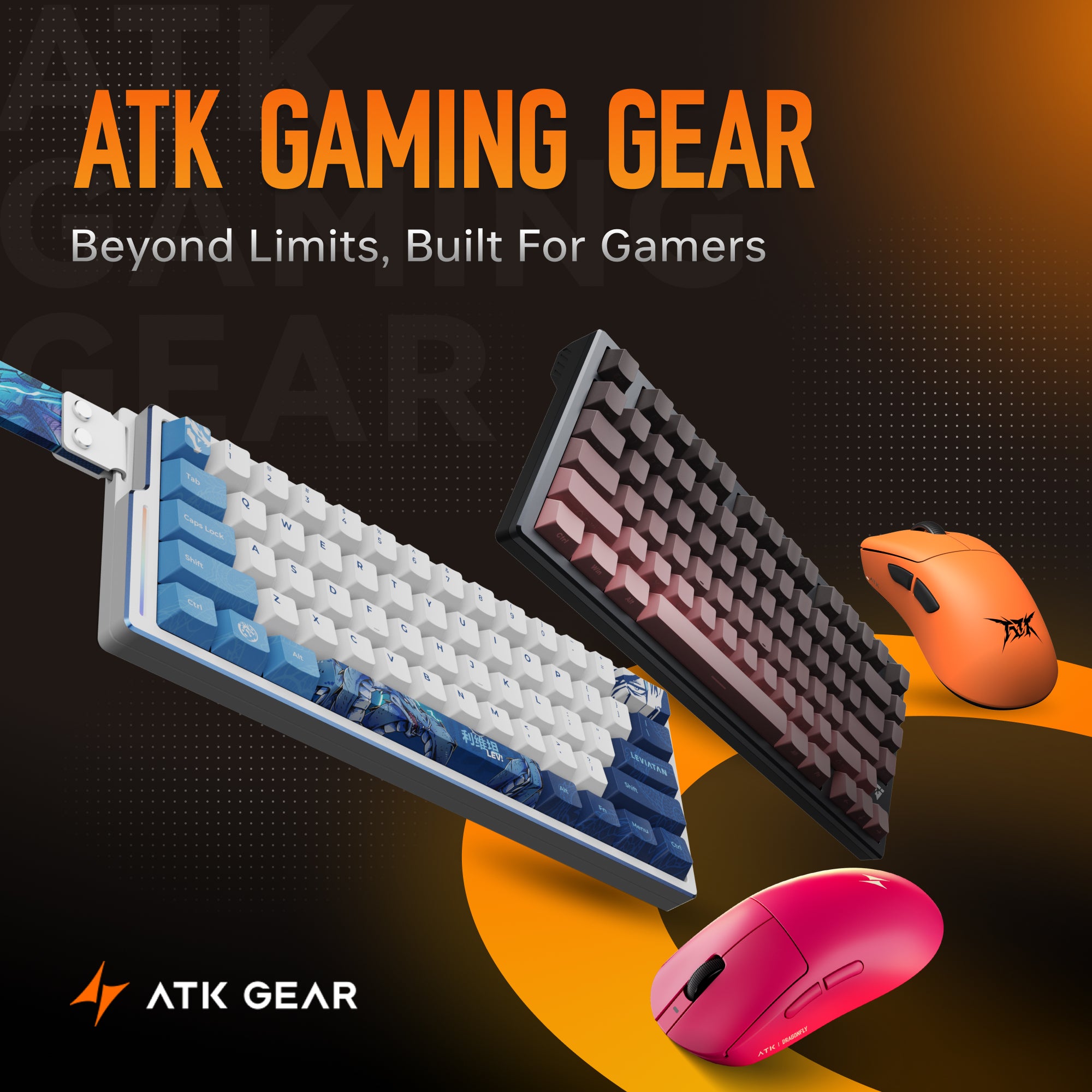

In the fast-paced world of competitive eSports, hardware specifications often dictate the margin between victory and defeat. As gaming mice evolve, the sensor remains the most critical component, serving as the "eye" that translates physical movement into on-screen action. Currently, the market is buzzing with a specific comparison: PAW3955 Master vs. PAW3950 Ultra. While both represent the pinnacle of optical technology from PixArt, they serve slightly different roles in the enthusiast and professional landscape. This guide provides a detailed breakdown of their technical capabilities, helping you decide which sensor deserves a place on your desk.
What Is the PAW3950 Ultra?
The PAW3950 Ultra is widely considered the current flagship standard for high-end gaming peripherals. Developed by PixArt, it was designed to offer a significant leap over the previous PAW3395, focusing on higher efficiency and better tracking on diverse surfaces, including glass.
The Ultra variant of the 3950 series was introduced to provide Tier 1 mouse manufacturers with a reliable, ultra-high-performance platform. It is the baseline for many professional mice used in global tournaments today. By optimizing the internal light-capturing algorithms, the PAW3950 Ultra sensor manages to keep power consumption low while maintaining an incredibly stable signal.
One of the standout features of this sensor is its refined Lift-Off Distance (LOD) management. Users can fine-tune exactly when the sensor stops tracking as the mouse is lifted, which is crucial for low-sensitivity players who "reset" their mouse position frequently. This reliability across various mousepads—from speed-oriented cloth to high-friction hybrid pads—is what makes it a top contender for the title of best gaming mouse sensor.
What Is the PAW3955 Master?
The PAW3955 Master is a customized, enhanced iteration of the PixArt 3950 architecture. Often seen in boutique or performance-focused brands like ATK, this sensor is essentially the "unlocked" or "overclocked" version of the standard flagship.
The PAW3955 Master sensor pushes technical boundaries further than its predecessors. It is designed for users who want the highest possible numerical ceiling in every category, from raw DPI to internal scan rates. Brands utilizing this sensor often collaborate closely with PixArt to implement custom firmware that prioritizes raw throughput and reduced processing latency.
The term "Master" signifies that this sensor has been tuned specifically for "pro" modes. While the hardware foundation is similar to the 3950, the 3955 variant often features a higher FPS (frames per second) scan rate internally. This allows the mouse to capture more "images" of the surface every second, resulting in a smoother data stream, especially when paired with high polling rates like 4,000Hz or 8,000Hz.
 PAW3955 Master vs. PAW3950 Ultra Specifications
To understand the 3955 vs. 3950 mouse sensor debate, one must look at the raw data. While they share the same physical DNA, their firmware-driven ceilings differ significantly.
Maximum DPI and Sensitivity
- PAW3950 Ultra: Generally offers a maximum DPI of 30,000 to 42,000 (depending on brand implementation).
- PAW3955 Master: Currently reaches a staggering 52,000 DPI.
While 52,000 DPI is far beyond what most humans can control, this headroom ensures that the sensor remains incredibly accurate at common ranges like 800 or 1,600 DPI by reducing interpolation errors.
IPS and Acceleration
Both sensors are virtually identical in terms of physical speed limits. They both support 750 IPS (Inches Per Second) tracking and 70G acceleration. This means that no matter how fast you "flick" your wrist across a massive mousepad, neither sensor will lose its "tracking lock." In a PAW3955 Master vs. PAW3950 Ultra comparison, both will comfortably handle the most aggressive human movements without malfunctioning.
Internal Scan Rates (FPS)
This is where the Master variant often takes the lead. The PAW3955 Master is frequently tuned to maintain a higher internal frame rate. This allows for more precise "Motion Sync" implementation. Motion Sync aligns the sensor's data reports with the PC's polling intervals, ensuring the most consistent cursor path possible.

Does Higher DPI Matter in Real Games?
The jump to 52,000 DPI on the PAW3955 Master raises a common question: Is this just marketing, or does it translate to performance? To answer this, we must look at how modern displays and resolutions are evolving.
4K and 8K Gaming Environments
As monitors move toward 4K and 8K resolutions, the distance the cursor needs to travel across pixels increases. High DPI ceilings allow for smoother movement on these high-density displays. While you may only use 3,200 DPI, having a sensor capable of 52,000 ensures that the "step" between each count is handled by a much more powerful processor, leading to less jitter and ripple.
Sensitivity Granularity
A higher DPI ceiling also allows for more granular sensitivity settings. Professional gamers often fine-tune their sensitivity to the third or fourth decimal point. Sensors with higher internal resolution can handle these micro-adjustments more accurately, providing a more consistent "feel" during long gaming sessions where muscle memory is paramount.
Reducing Input Latency
In many cases, the high DPI capability is a side effect of a more powerful internal MCU (Microcontroller Unit). Because the sensor can process 52,000 counts, it is inherently faster at processing lower counts. This contributes to a "snappier" feeling, which is why many enthusiasts believe the 3955 is the best gaming mouse sensor currently available for those who prioritize raw speed.
Tracking Speed and Acceleration
Tracking speed (IPS) and acceleration (G) are the physical safeguards of a mouse sensor. They ensure that the sensor does not "spin out" or lose its place during violent movements.
The 750 IPS Standard
The 750 IPS limit shared by the PAW3955 Master sensor and the PAW3950 Ultra sensor is massive. For context, 750 inches per second is roughly 19 meters per second. No human can move a mouse that fast in a controlled manner. This high limit is designed to provide a "safety buffer," ensuring that even if you swipe your mouse at your physical limit, the sensor remains perfectly calm and accurate.
70G Acceleration
Similarly, 70G of acceleration is far beyond any physical movement a human could produce. This specification is more about the sensor's ability to recover from sudden changes in direction. In games like Valorant or Counter-Strike 2, where you might need to do a 180-degree turn instantly, 70G acceleration ensures the cursor doesn't skip or stutter during that transition.
Consistency Across Materials
High-end tracking is also about surface tolerance. Both the 3950 and 3955 excel at tracking on problematic surfaces. Whether you use a glass mousepad, a cordura surface, or a traditional cloth pad, the high IPS/G ratings ensure that the sensor's internal imaging can always find enough "landmarks" on the surface to stay locked on.
Which Sensor Is Better for Competitive Gaming?
When choosing between a PAW3955 Master vs. PAW3950 Ultra, the "better" choice often depends on your system's overall capabilities and your personal sensitivity to latency.
The Argument for PAW3950 Ultra
The 3950 Ultra is the "safe" professional choice. It is used by the biggest brands with the most refined firmware. If you value stability and a proven track record in the pro circuit, the 3950 Ultra is more than enough. It provides world-class tracking that will never be the bottleneck in your performance.
The Argument for PAW3955 Master
The 3955 Master is for the "bleeding edge" enthusiast. If you use a 360Hz or 540Hz monitor and an 8,000Hz polling rate, the 3955 Master’s higher internal scan rate and 52,000 DPI ceiling provide the most technologically advanced data stream. It is designed to minimize the tiny variances that might occur in standard sensors, offering a "pure" connection between the hand and the game.
Motion Sync Implementation
Both sensors support Motion Sync, but the implementation in the Master variant is often more aggressive. By aligning the sensor's internal "camera shutter" exactly with the USB report, the 3955 can provide a slightly more linear movement feel. For hitscan players (snipers), this micro-level consistency can result in a higher hit percentage over time.
How to Test the Difference
If you have both mice and want to see the 3955 vs. 3950 mouse sensor difference for yourself, you can use several software tools and physical tests to measure performance.
Using MouseTester Software
MouseTester is a community-standard tool that generates graphs of your mouse's counts over time. By performing "swipes" at different speeds, you can see how well the sensor follows a line. You are looking for a smooth curve with no "outliers" or dots that stray far from the path. Typically, the PAW3955 Master will show a slightly "cleaner" graph at ultra-high speeds due to its higher internal processing power.
Testing for Jitter and Ripple
Set both mice to a very high DPI (like 10,000+) and move them slowly in a paint program. You are looking for jagged lines or "jitter." High-end sensors like the PAW3950 Ultra sensor and the PAW3955 Master sensor should show almost zero jitter even at these high settings. The Master variant’s higher internal resolution usually results in an even smoother line at the extreme high end of the DPI range.
Lift-Off Distance (LOD) Test
Place a few DVDs or thin cards on your mousepad and see at what height the mouse stops moving. Most professional gamers prefer a low LOD (under 1.0mm). Both of these sensors allow for adjustment in 0.1mm increments via their respective software hubs. Testing the LOD stability ensures that the sensor doesn't become "confused" when the mouse is slightly tilted or unevenly lifted.
Additionally, some leading brands like ATK provide proprietary web-based calculation tools that allow users to verify their sensor's reporting accuracy and latency in real-time.

PAW3955 Master or PAW3950 Ultra: Which Should You Choose?
Making a final decision in the PAW3955 Master vs. PAW3950 Ultra debate comes down to your personal philosophy on hardware and your budget.
Choose PAW3950 Ultra if:
- You prioritize reliability and a proven platform used by mainstream pro players.
- You play at standard resolutions (1080p or 1440p) and standard polling rates (1,000Hz).
- You want a mouse from a major manufacturer with mature, stable software ecosystems.
Choose PAW3955 Master if:
- You are a "hardware maximizer" who wants the highest specs available on the market.
- You use a high-refresh-rate monitor (240Hz+) and high polling rate (4K/8K).
- You want the most advanced customization options, including granular sensor position adjustments often found in mice using this sensor.
Making the Right Sensor Choice for Your Setup
The evolution from the PAW3950 Ultra to the PAW3955 Master represents the ongoing refinement of gaming technology. While both sensors offer performance far beyond what is strictly necessary for human play, the Master variant provides an extra layer of precision for the most demanding eSports environments. Whether you choose the reliable Ultra or the boundary-pushing Master, you are investing in the best gaming mouse sensor technology currently available. Ultimately, your choice should reflect your setup's capabilities—but rest assured, either sensor will provide a flawless tracking experience that lets your skill shine through.
PAW3955 Master vs. PAW3950 Ultra FAQs
Can I feel the difference between 30,000 and 52,000 DPI?
No, the human hand cannot distinguish between these two levels of sensitivity in a direct movement test. However, the higher ceiling of the PAW3955 Master sensor means it is more accurate and has less "noise" when used at lower, more common DPI settings like 800 or 1,600.
Does the PAW3955 Master work on glass mousepads?
Yes, absolutely. Both the PAW3950 Ultra sensor and the Master variant feature advanced Glass-Track technology. They can track reliably on high-reflectivity surfaces, including tempered glass pads, provided the glass is at least 2mm to 4mm thick.
Is the PAW3955 Master more expensive than the 3950 Ultra?
Generally, yes. Because the PAW3955 Master sensor is a customized, higher-spec part with more advanced firmware requirements, mice equipped with it often carry a premium price tag or are found in "Pro" or "Ultra" editions of specific mouse lineups.
Should I turn on Motion Sync?
Yes, for most players, Motion Sync is recommended. It improves the "smoothness" of the cursor movement. However, it can add a tiny amount of input delay (usually less than 1ms). Professional hitscan players often prefer it on, while some flick-heavy players prefer it off for the most "raw" feel possible.
Does a higher polling rate require a PAW3955 Master?
No, but they go well together. While a 3950 Ultra can handle 4,000Hz or 8,000Hz polling quite well, the 3955 vs. 3950 mouse sensor internal scan rate difference means the 3955 can provide a more consistent stream of data to match those extremely fast USB report intervals.
