


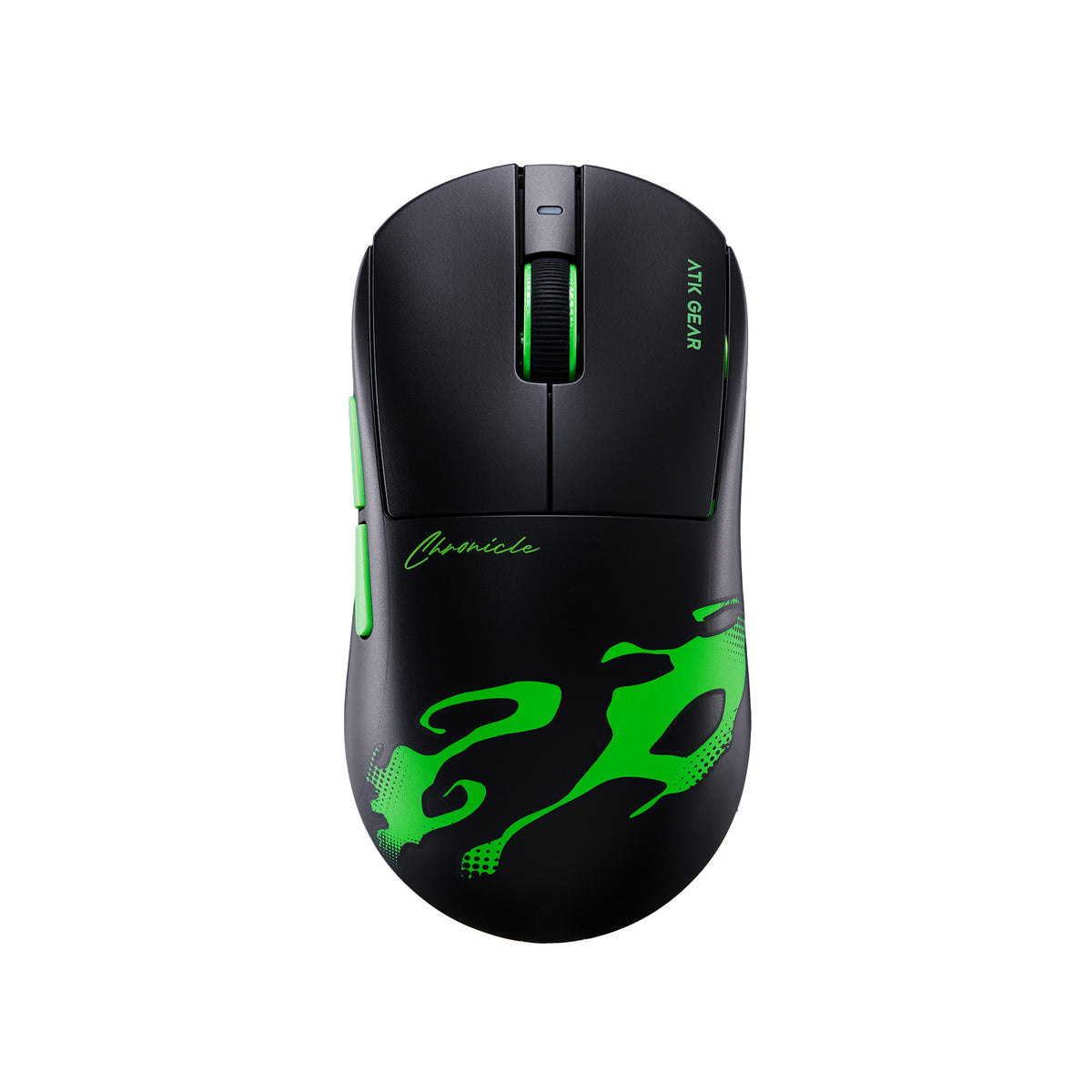
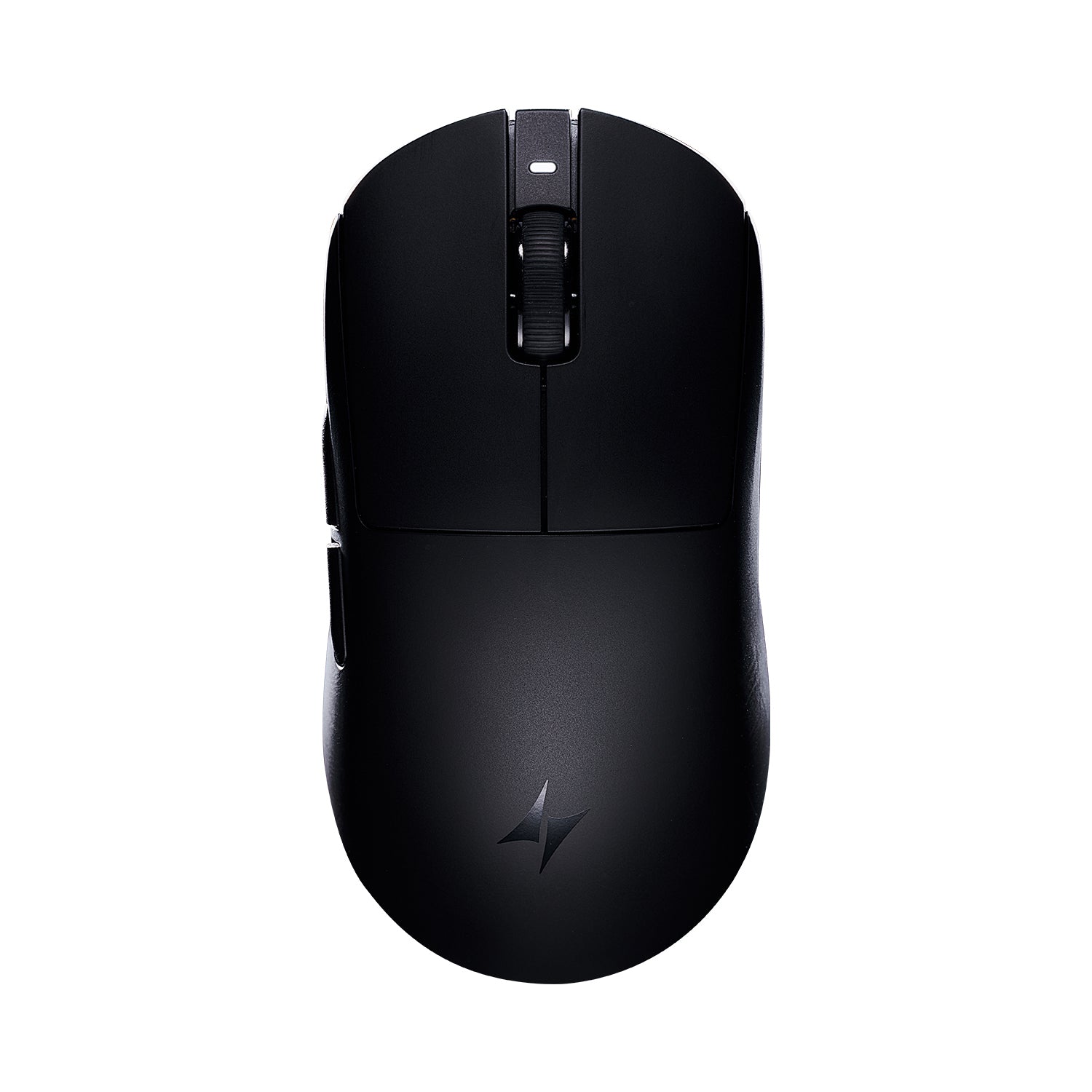
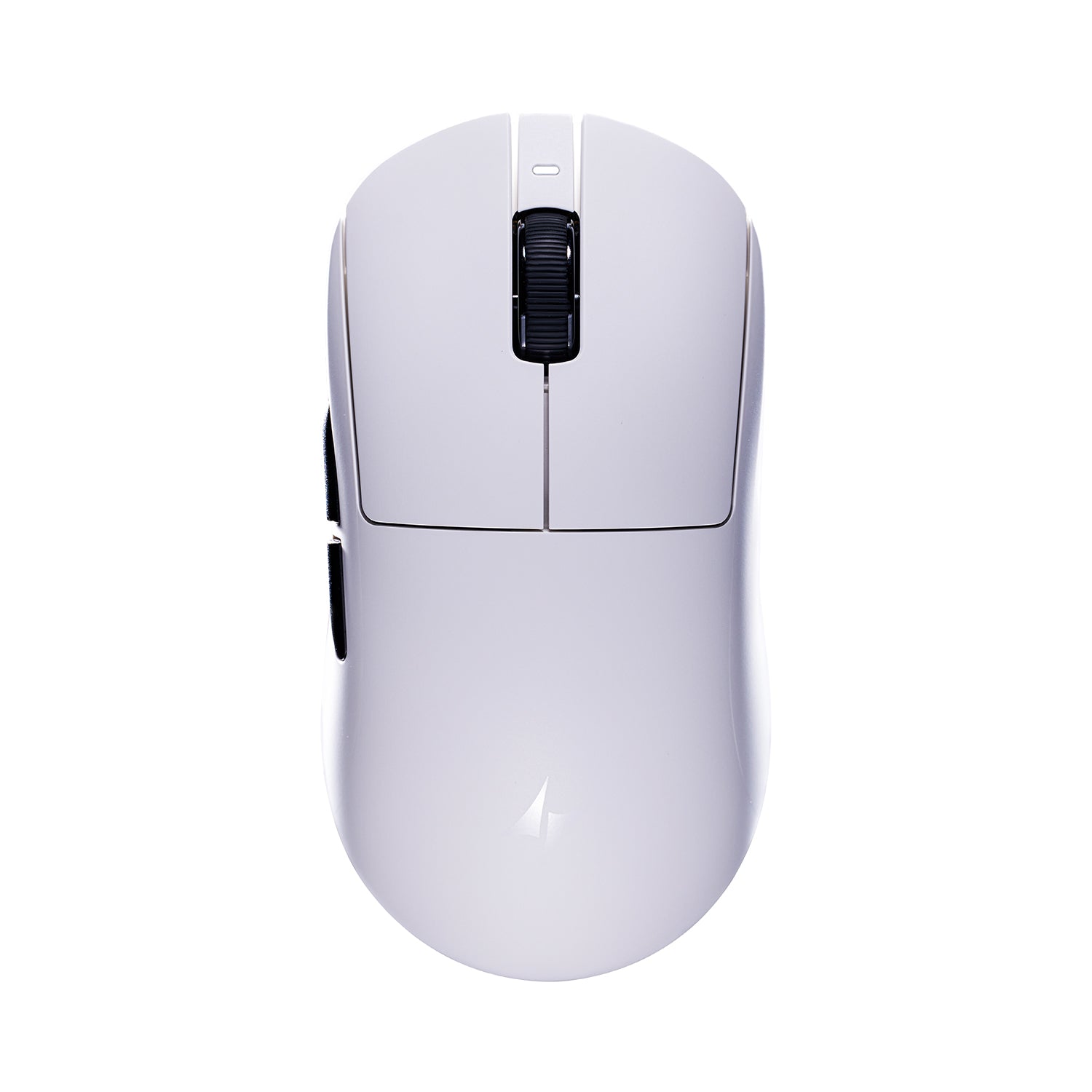
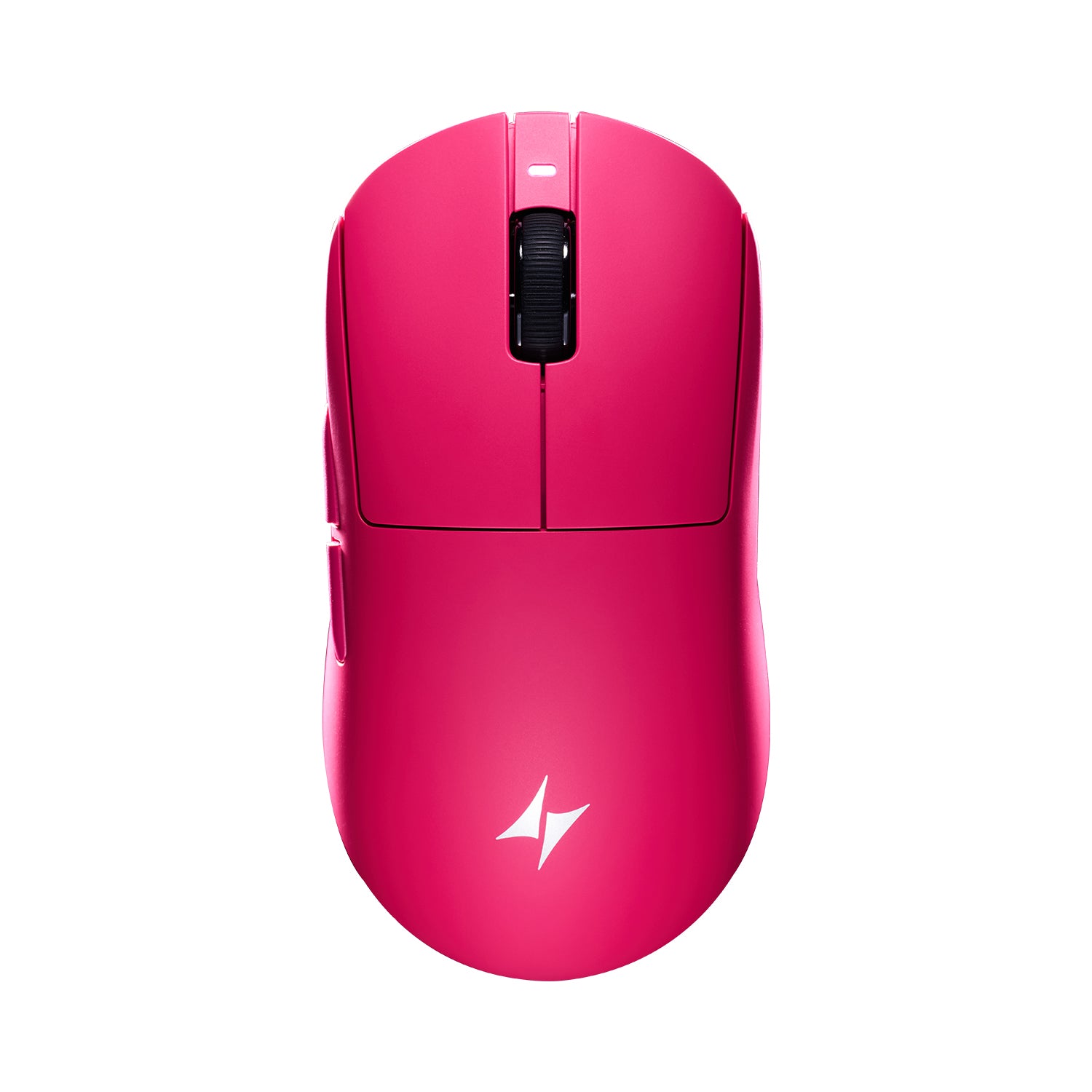
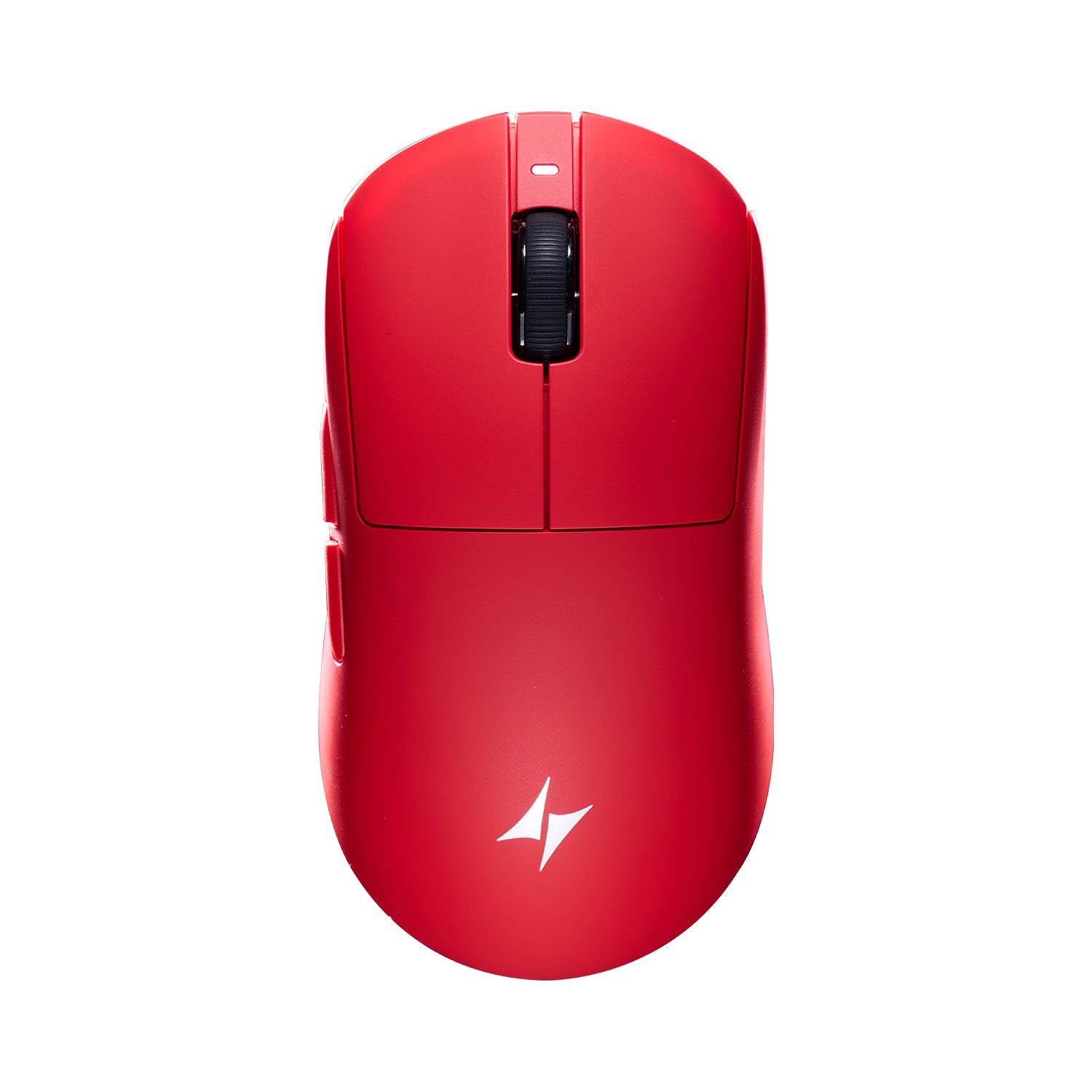
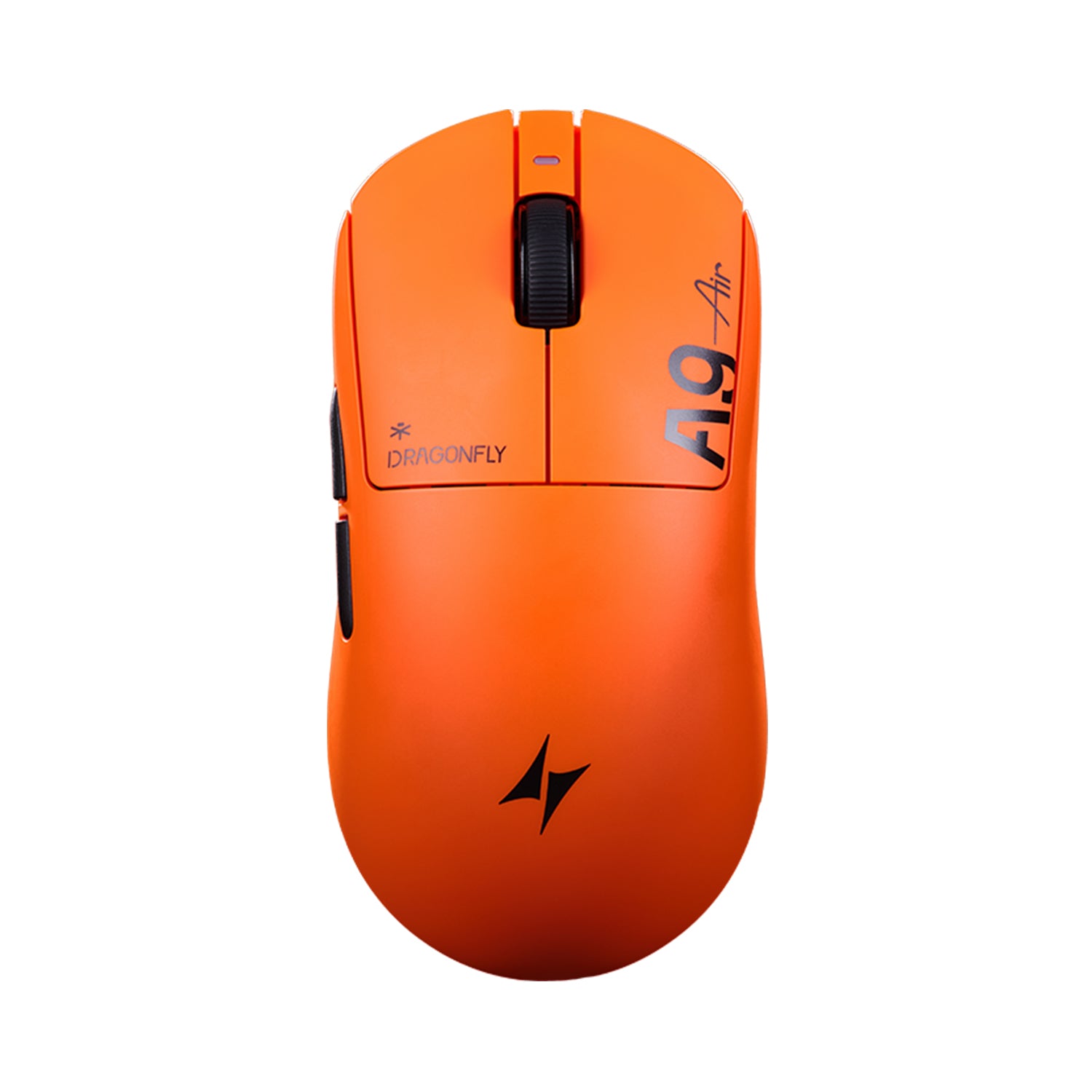
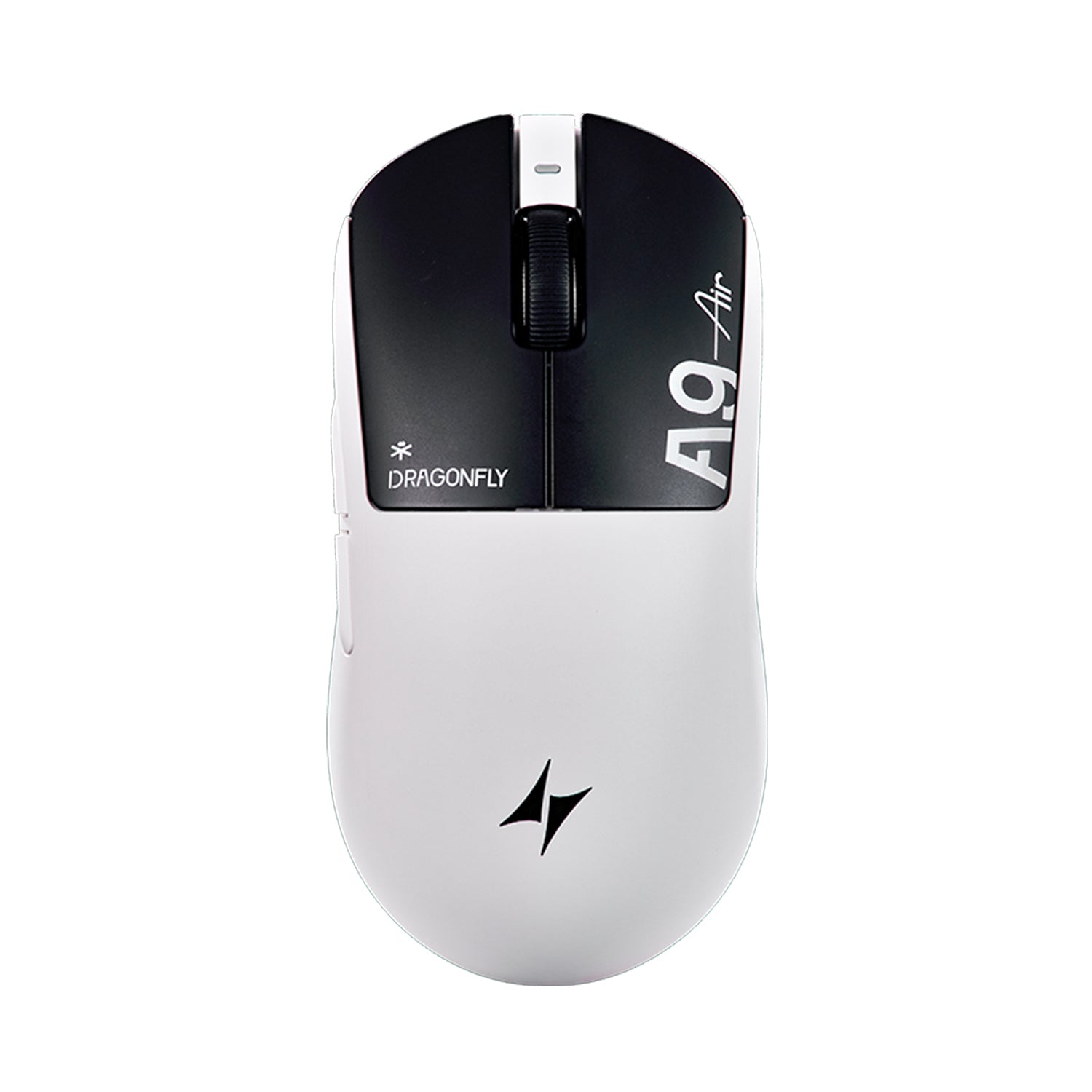
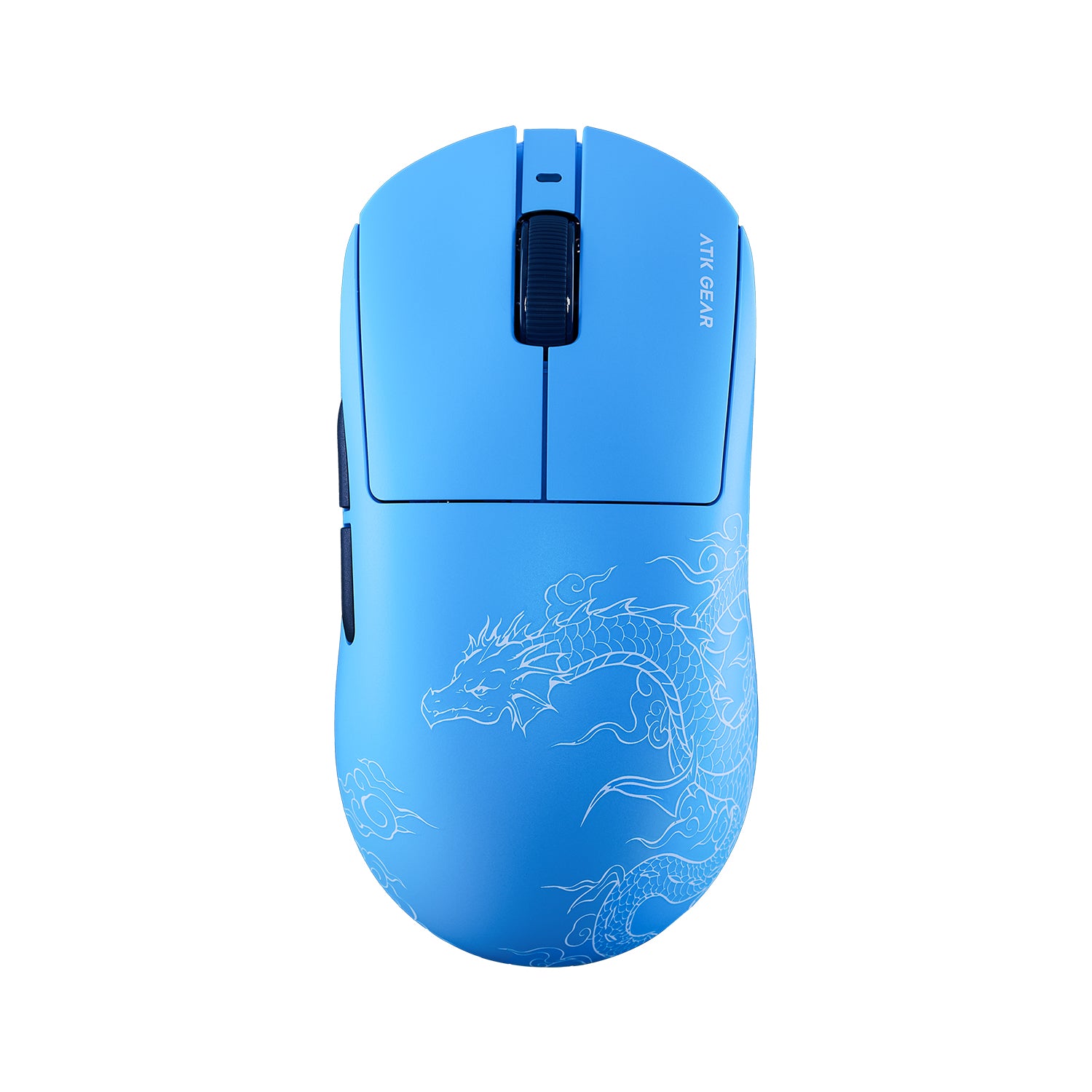
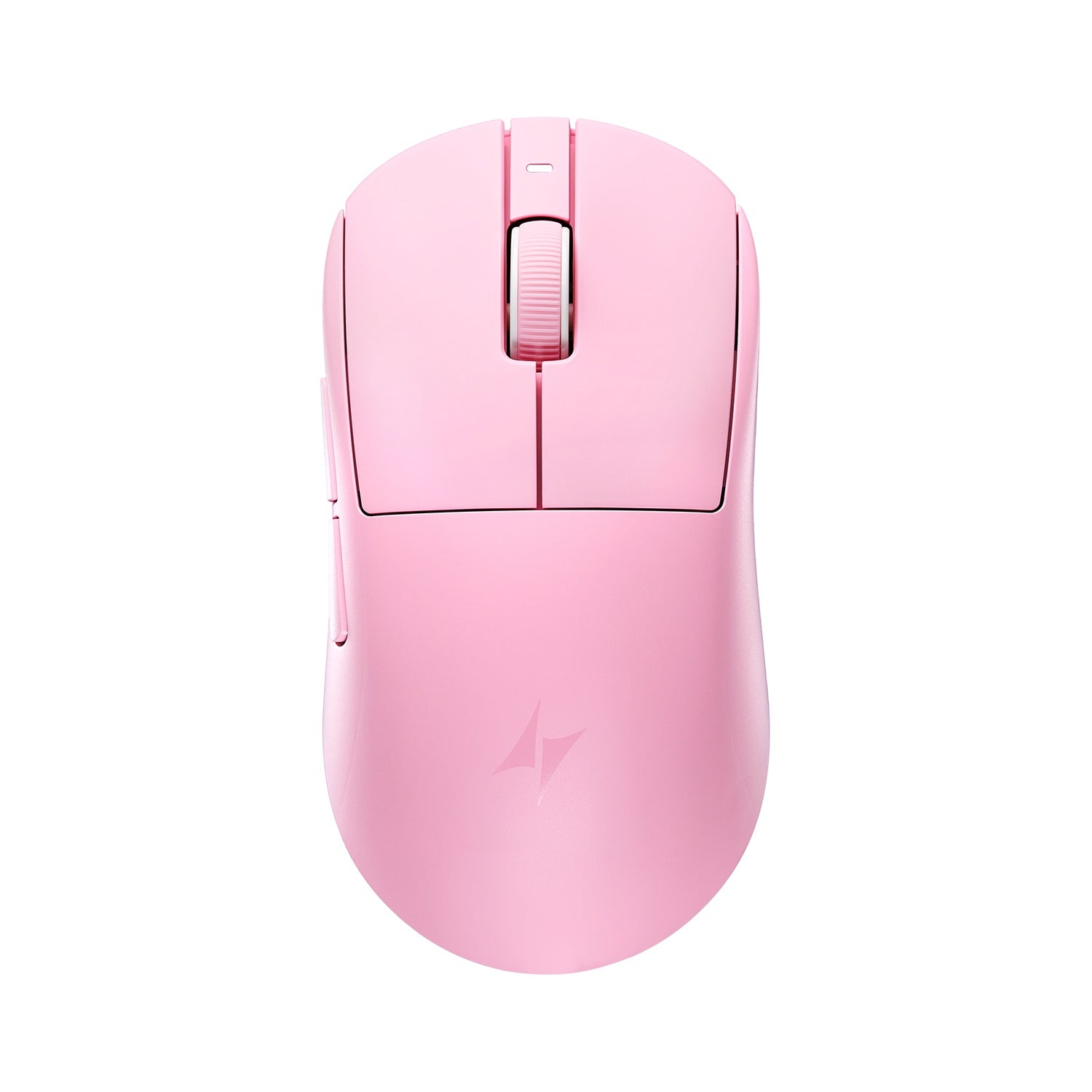
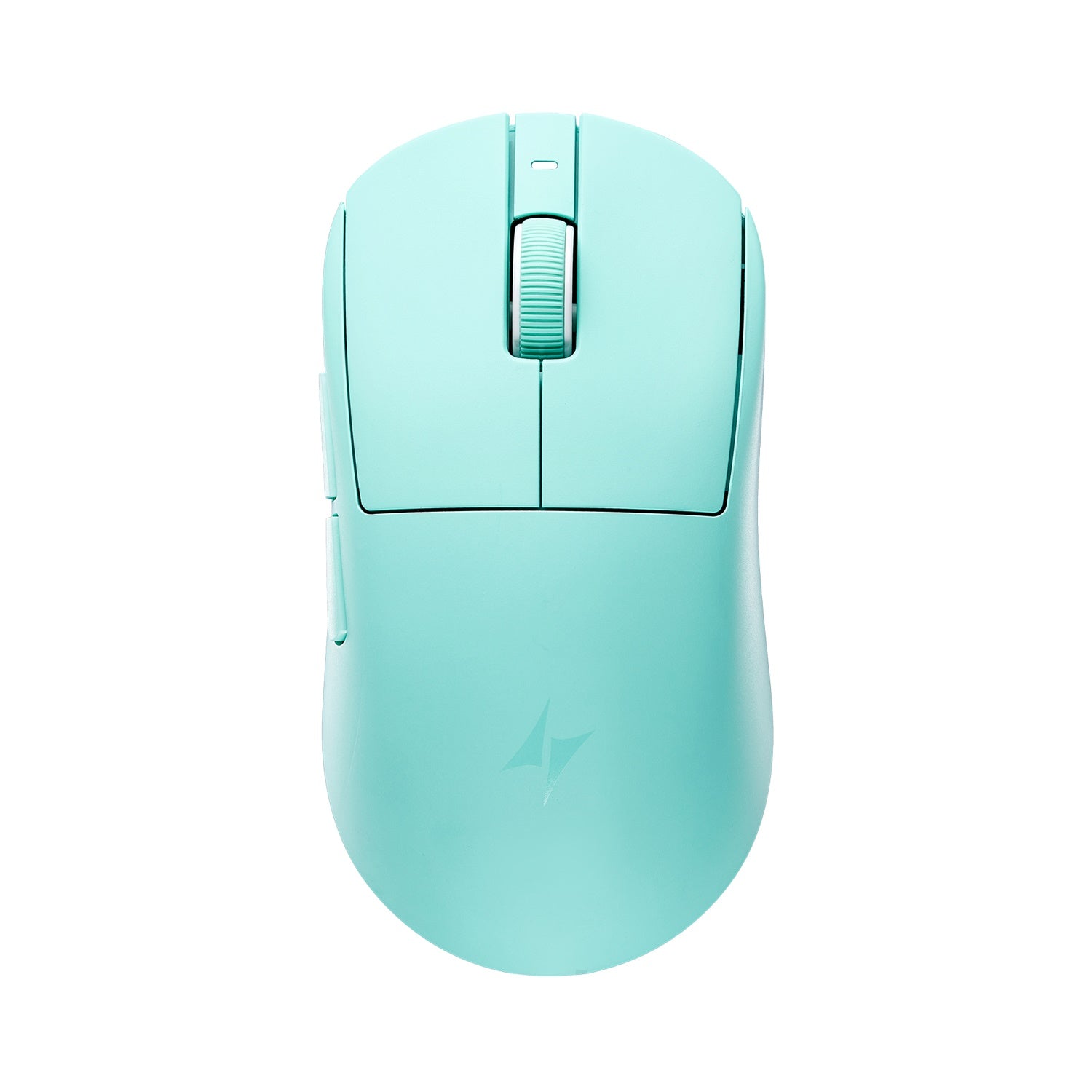
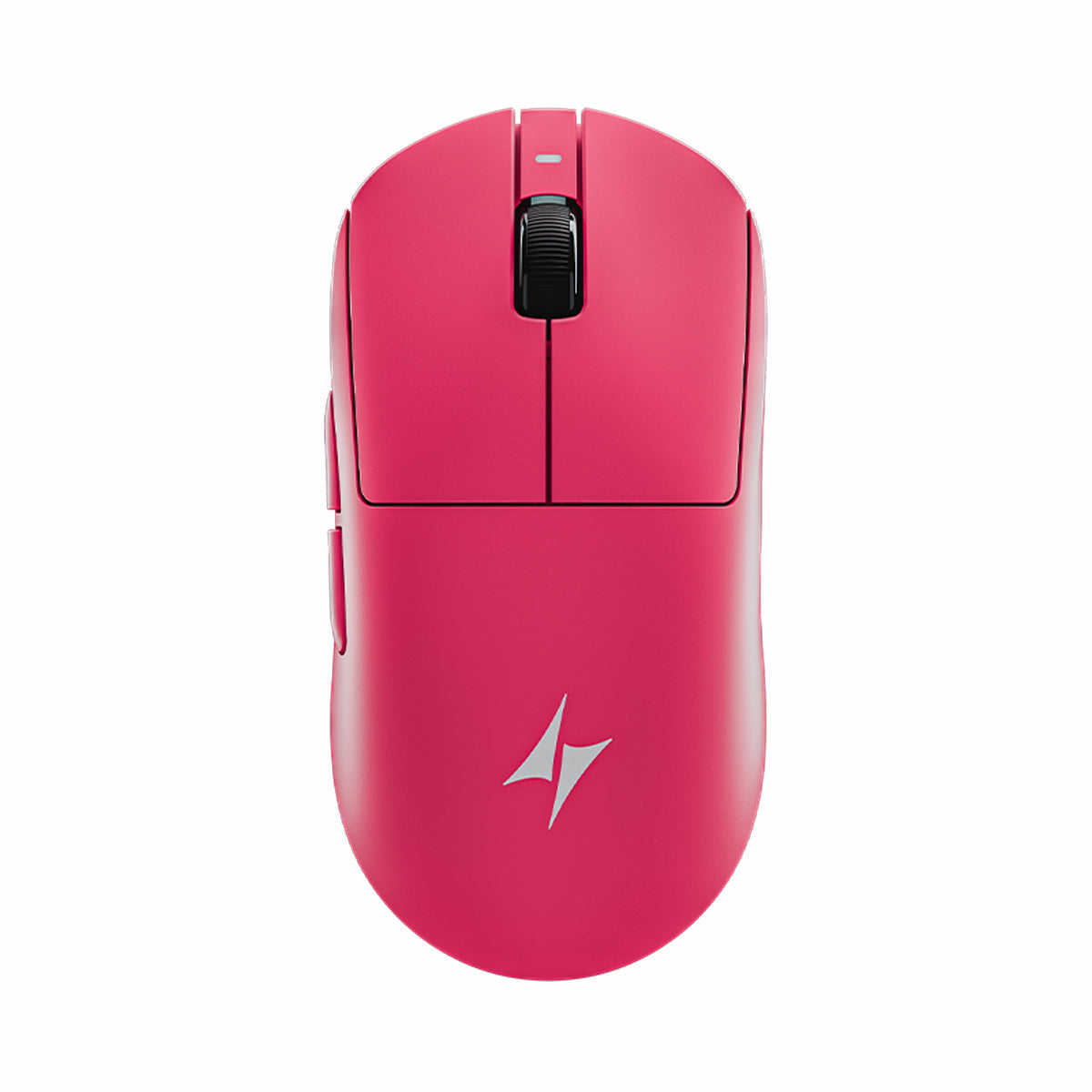
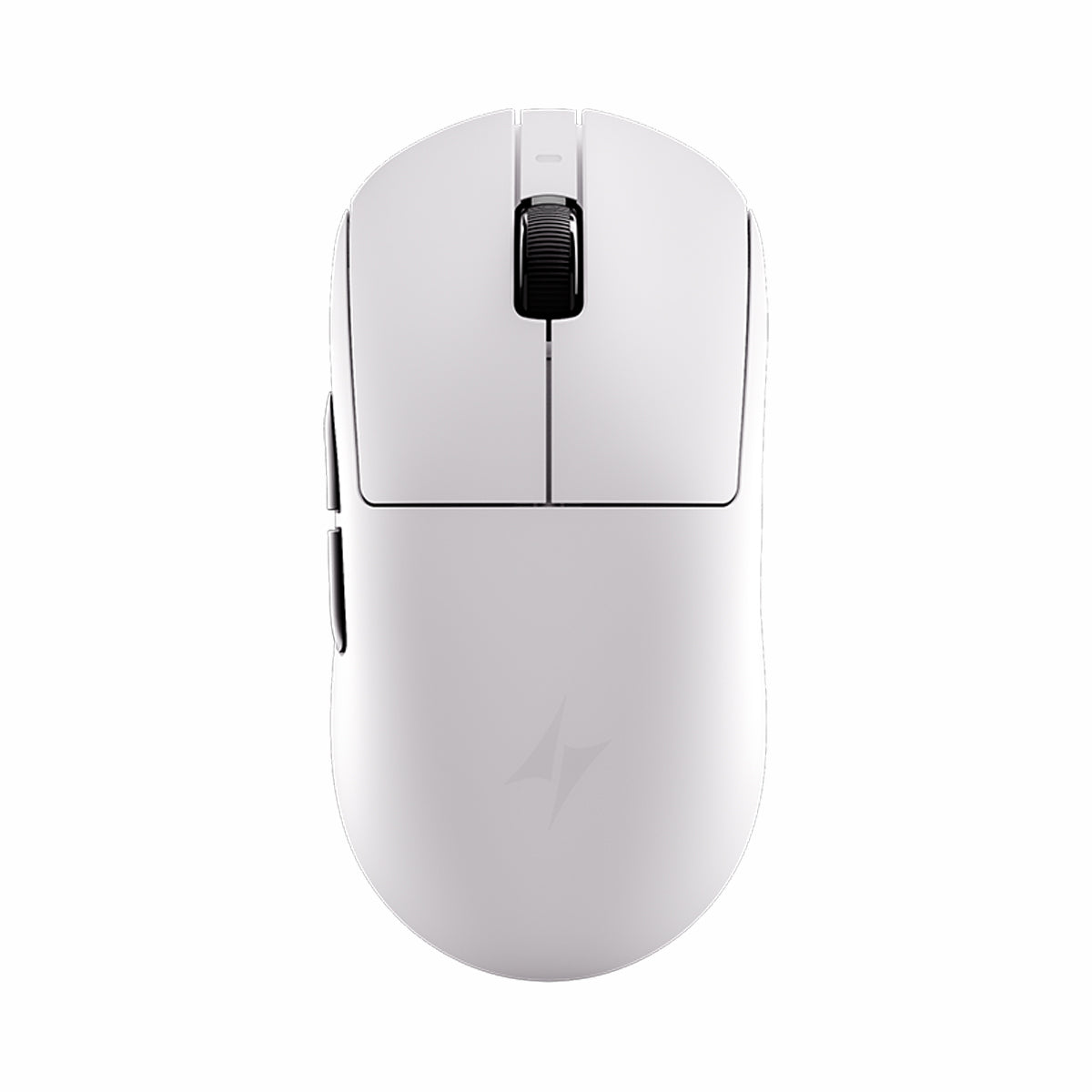
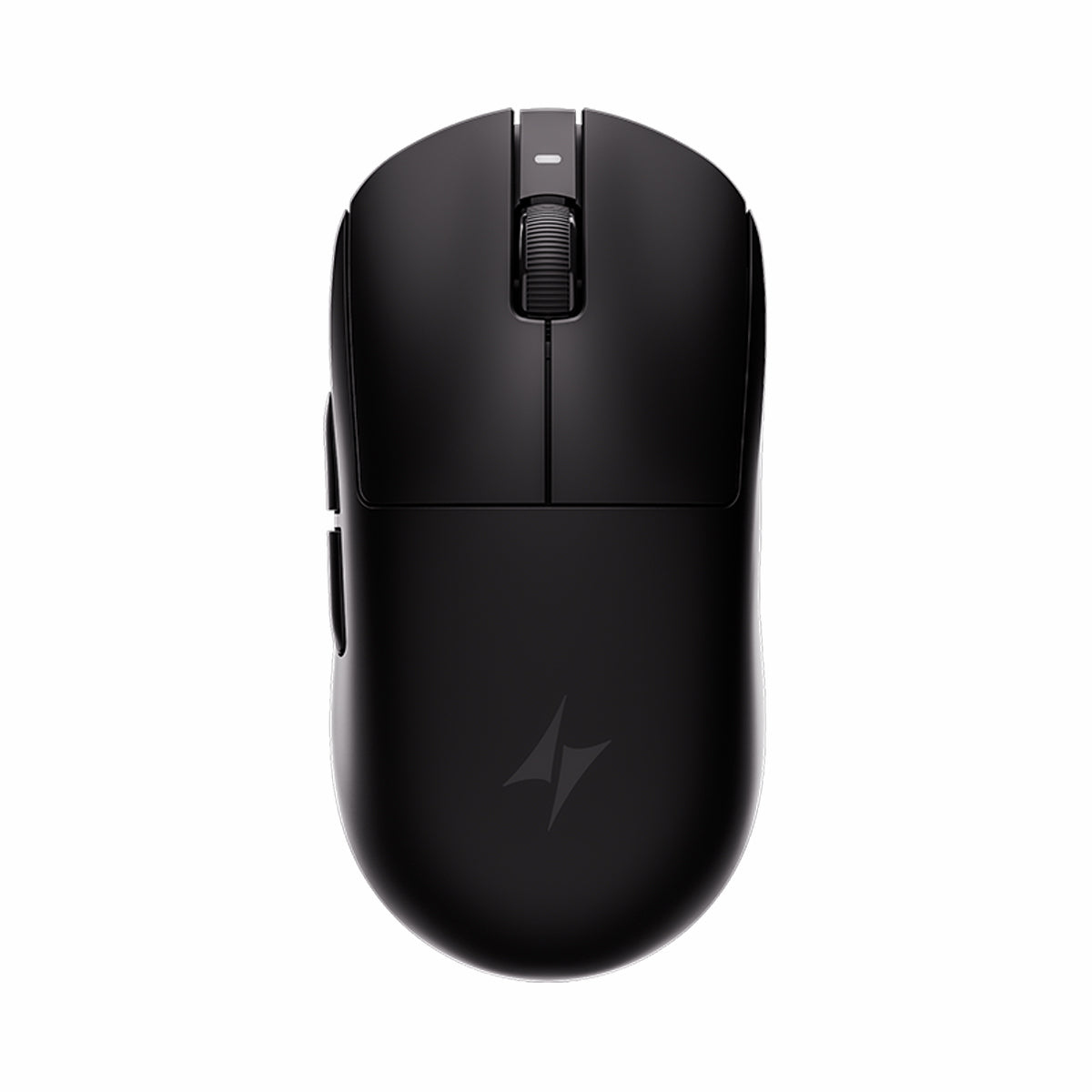
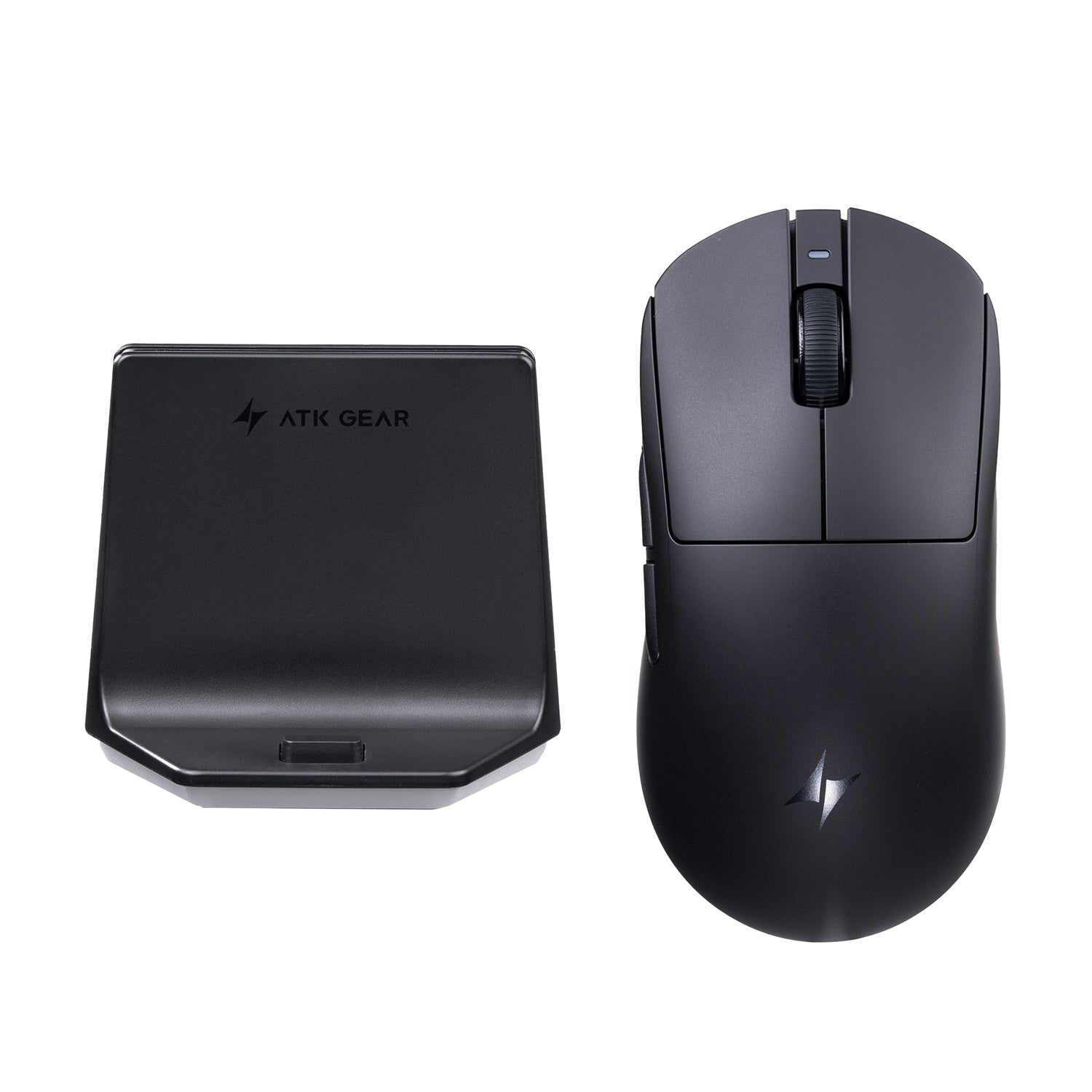
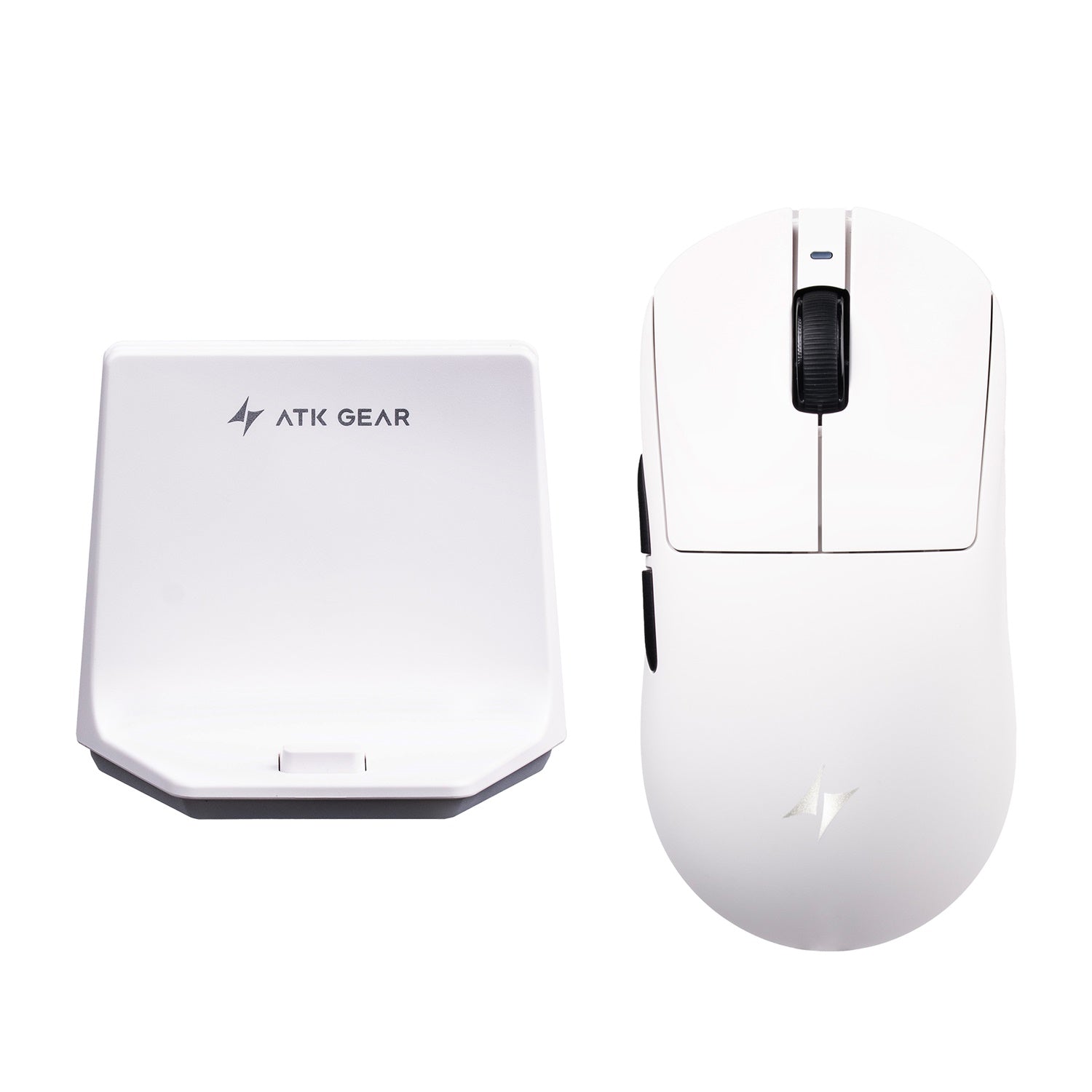
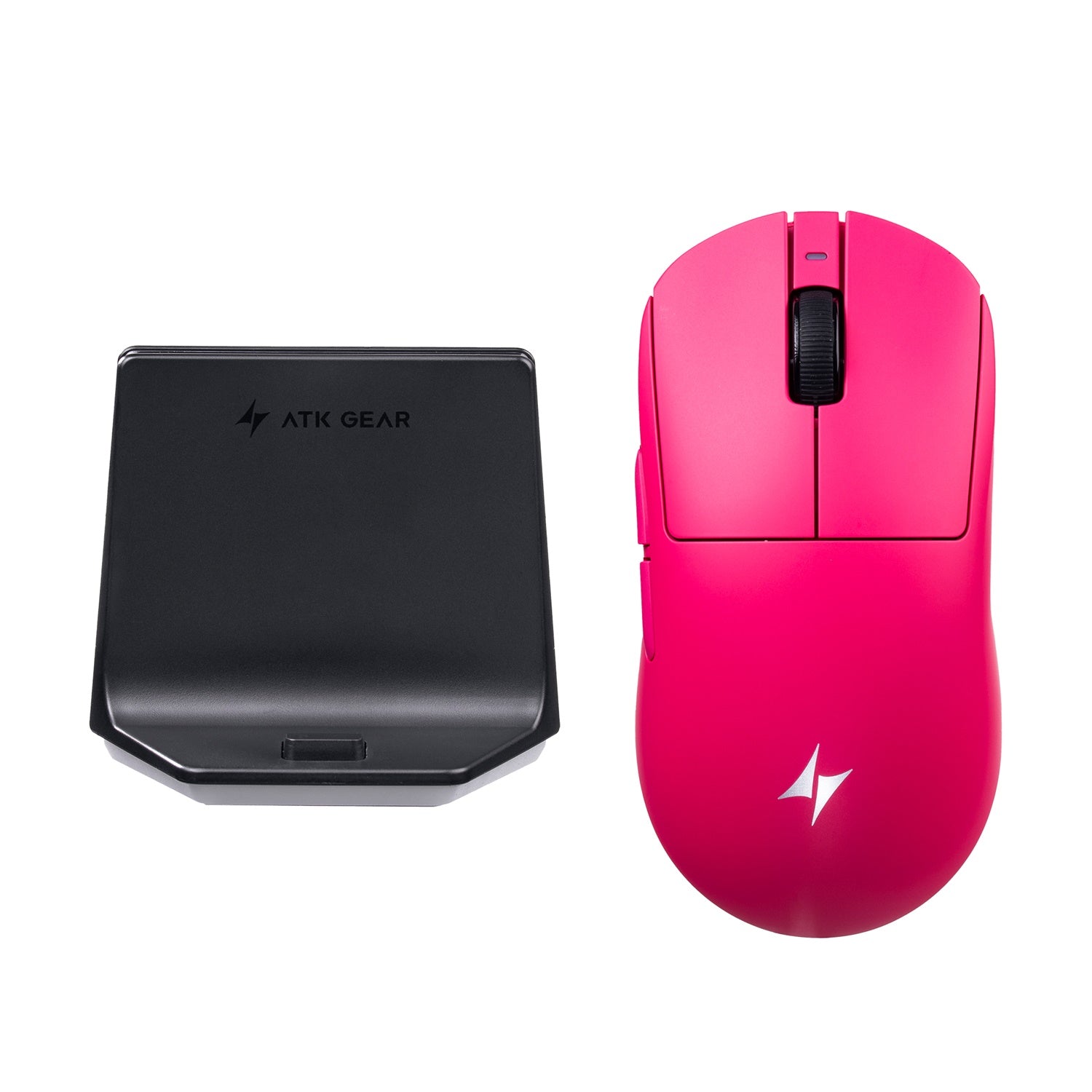
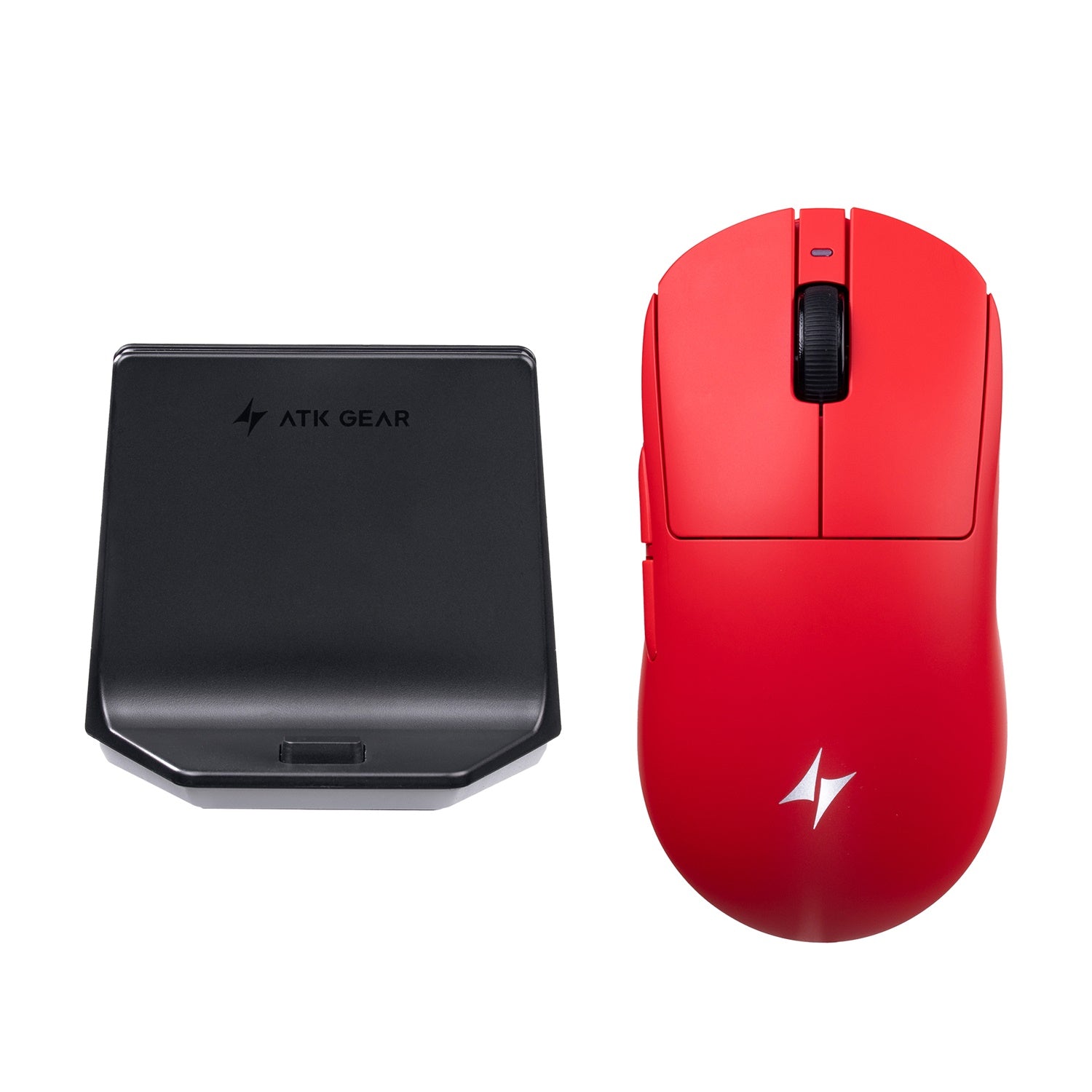
The ATK A9 Series lightweight wireless mouse range is built around a symmetrical shape, low-weight construction, and configuration choices for competitive play, mixed gaming and work, or a fixed desktop setup. Depending on the selected version, shoppers can prioritize a lighter Mini or Air body, tri-mode connectivity, higher polling rates, longer rated battery life, or a charging dock. Because weight, sensor, switch, battery, and connection modes vary by configuration, the most useful comparison starts with hand size, grip style, and the way the mouse will be used.
Symmetrical shape and weight options
Full-size A9 shapes are approximately 125 mm long and are positioned for medium-to-large hands, with claw, palm, and fingertip grip support. Weight is a major point of difference: standard A9 configurations are listed around 53 g, while the A9 Ultimate product page includes Mini models around 39 g, Air models around 47 g, and fuller Ultimate or Ultra Max options around 55 g. The A9 NB is listed around 56 g and focuses on dock-based charging.
A lower weight can make lifting and quick repositioning easier, especially for fingertip and claw grip users. A fuller shell may provide steadier palm contact for players who prefer more hand support. Grip comfort also depends on weight balance and the way each configuration fits the user’s movement style.
Sensors, switches, and polling rates
Hardware changes between A9 configurations. Entry versions may use a PAW3311 sensor and a 1,000 Hz polling rate, while selected higher-spec models list PAW3950 Ultra or PAW3955 Master sensors and polling up to 8,000 Hz. The higher rate sends position updates more frequently and may suit a capable gaming PC with a high-refresh-rate display. A 1,000 Hz setting remains practical for many games and everyday tasks while placing less demand on system and battery resources.
Coating and switch type vary by exact model and variant. Check the specification block for the selected variant before ordering.
Connectivity and battery considerations
For competitive gaming, 2.4 GHz wireless or wired mode is generally the clearer choice. Bluetooth is convenient for office use, laptops, and routine device switching, but it is not available on every A9 configuration. Standard A9 and selected A9 Ultimate versions offer tri-mode connectivity, while the A9 NB focuses on wired and 2.4 GHz use through its integrated charging dock.
Battery capacity and published runtime also differ. A standard A9 configuration lists a 500 mAh battery rated for up to 120 hours at 1,000 Hz. The A9 NB lists an 800 mAh battery with up to 200 hours at 1,000 Hz, while selected A9 Ultimate configurations publish ratings up to 800 hours at the same polling rate. Higher polling settings can increase power use and reduce the time between charges.
Featured ATK A9 lightweight wireless mice
- ATK Dragonfly A9 Series Lightweight Wireless Mouse offers the core full-size A9 shape in A9 SE, A9, A9 Plus, A9 Pro, A9 Pro Max, and A9 Ultra versions. Its symmetrical shell is designed for claw, palm, and fingertip grips, while the A9 SE specification lists a weight of 53±3 g and wired, 2.4 GHz, and Bluetooth connectivity. Sensor, battery, polling-rate, coating, and switch specifications vary by model, allowing buyers to select a configuration that matches their budget and performance needs within the same familiar shell.
- ATK Dragonfly A9 Ultimate Lightweight Wireless Mouse provides a broader selection of form factors and hardware configurations, including Ultra Max 2.0, Ultimate, Ultimate+, Air, Air+, Mini, and Mini+ versions. The specification table lists weights of 55±3 g, 47±3 g, or 39±3 g depending on the selected model. Sensor options include PAW3950 Ultra and PAW3955 Master, while supported specifications include polling rates up to 8,000 Hz and published battery life of up to 800 hours at 1,000 Hz. Connectivity also varies by version, so buyers should confirm the selected configuration before ordering.
- ATK Dragonfly A9 NB Lightweight Wireless Mouse pairs the A9 shape with an all-in-one 2-in-1 charging dock. The dock integrates the 2.4 GHz receiver, supports contact charging, and automatically pairs with the mouse upon docking. The A9 NB Ultra is specified at 56±3 g and includes a PAW3950 Ultra sensor, an 8,000 Hz polling rate, an 800 mAh battery rated for up to 200 hours at 1,000 Hz, and wired or 2.4 GHz connectivity. Bluetooth is not listed for A9 NB Ultra, making it a focused option for a dedicated gaming desk setup.