


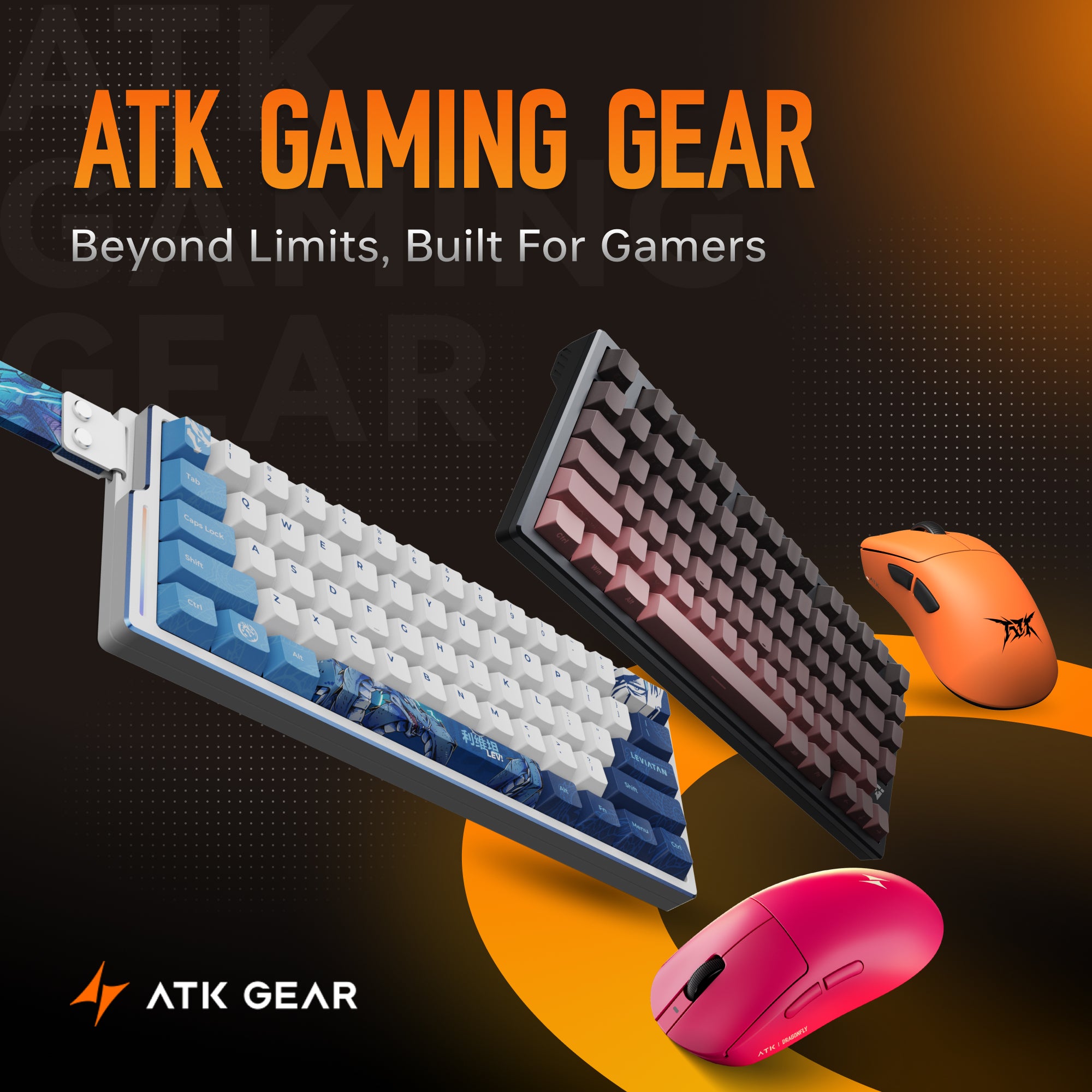

You have a limited upgrade budget and three obvious options: a better gaming mouse, a faster keyboard, or a higher-refresh-rate monitor.
Which one will actually make the biggest difference?
The best first upgrade is usually the component that is creating the clearest limitation in your current setup. A player still using a 60 Hz monitor may notice a much larger change from upgrading the display than from replacing an already capable mouse. Someone playing competitive FPS games with an uncomfortable office mouse may benefit more from fixing the mouse first. A Hall Effect keyboard becomes more compelling when the monitor and mouse are already doing their jobs well and movement input is the next area you want to fine-tune.
The goal is not to buy the device with the biggest number on the spec sheet. It is to remove the weakest link.
Quik Answer: What Gaming Gear Should You Upgrade First?
Use this as a starting point:
|
Your Current Setup or Problem
|
Upgrade First
|
|
Still playing competitive games on a 60 Hz display
|
Monitor
|
|
Mouse feels uncomfortable or poorly matched to your grip
|
Mouse
|
|
Using a basic office mouse for competitive FPS
|
Mouse
|
|
Good mouse and monitor, but limited keyboard customization
|
Keyboard
|
|
Full-size keyboard leaves too little mouse space
|
Keyboard
|
|
High-refresh monitor but poor mouse fit
|
Mouse
|
|
No obvious hardware limitation
|
Optimize your current setup before buying
|
Gaming responsiveness is a chain. Improving one already-strong component may deliver less practical value than fixing an obvious weakness elsewhere.
When Should You Upgrade Your Monitor First?
The monitor is the final stage between the game and your eyes.
Refresh rate describes how many times a display can refresh each second. The theoretical interval between refreshes is approximately:
|
Refresh Rate
|
Time Between Refreshes
|
|
60 Hz
|
16.7 ms
|
|
144 Hz
|
6.9 ms
|
|
240 Hz
|
4.2 ms
|
|
360 Hz
|
2.8 ms
|
A higher refresh rate can make motion appear smoother and give you more frequent visual updates when the rest of the system can supply enough frames.
That can be particularly noticeable in fast-moving competitive games.
Upgrade your monitor first if:
-
You still play competitive games at 60 Hz.
-
Your PC can consistently produce frame rates well above 60 FPS.
-
Motion clarity is an obvious limitation.
-
Your mouse already fits your hand comfortably.
-
Your keyboard works reliably.
-
You want a smoother visual experience before chasing smaller peripheral gains.
There is one important limitation: the PC still has to render the frames.
A 240 Hz or 360 Hz display cannot create hundreds of unique game frames if your system is only producing 70 FPS. Before buying a monitor primarily for refresh rate, check what your most-played games can actually sustain.
When Does a Gaming Mouse Make the Biggest Difference?
For mouse-driven games, the mouse is the physical link between your hand and the crosshair.
That makes mouse choice highly personal.
Gaming mice differ in:
-
shape
-
dimensions
-
weight
-
weight distribution
-
sensor implementation
-
click feel
-
wireless performance
-
polling-rate support
-
skates
-
button placement
You can explore ATK's current range of gaming mice, but specifications alone should not decide which model fits you.
Mouse shape often matters more than headline specifications
A technically advanced mouse that fights your grip can be less useful than a simpler model that fits your hand naturally.
The relationship between hand size, grip style, and shell geometry affects how comfortably you can perform:
-
micro-adjustments
-
flicks
-
continuous tracking
-
repeated direction changes
ATK's guide to mouse shape for MOBA and FPS games explores this in more detail.
Palm grip
Palm-grip players often prefer more contact between the hand and mouse.
A shell with sufficient length and rear support can give the palm a more stable resting surface.
Claw grip
Claw-grip users often look for rear-palm support while keeping the fingers arched and mobile.
The position and shape of the rear hump can be particularly important.
Fingertip grip
Fingertip users typically rely on less palm contact and may prefer a shorter or lighter mouse that is easy to reposition with the fingers.
These are tendencies, not rules.
Your actual comfort matters more than the grip-style label.
Does Mouse Weight Matter?
Yes, but lighter does not automatically mean better.
Lower mass reduces the force required to accelerate and decelerate the mouse. That can make repeated movement and large low-sensitivity sweeps feel easier.
But mouse control depends on more than total weight.
A very light mouse with a poor shape may feel harder to control than a slightly heavier model that fits your hand well. Weight distribution also changes how a mouse feels during starts, stops, and lifts.
Consider upgrading the mouse first if:
-
Your current mouse causes discomfort.
-
It feels too large or too small.
-
The shape does not suit your grip.
-
Tracking or wireless performance is unreliable.
-
The mouse is difficult to reposition during low-sensitivity play.
-
You are still using a general-purpose office mouse for competitive gaming.
If none of those problems exist, replacing a capable gaming mouse simply because another model has a higher polling rate may produce a relatively small practical difference.
When Should You Upgrade Your Keyboard First?
The keyboard is less directly connected to crosshair movement, but it handles many of the actions you repeat constantly:
-
movement
-
strafing
-
crouching
-
jumping
-
weapon switching
-
abilities
-
utility
-
communication shortcuts
For many casual players, replacing an already reliable keyboard may not feel as dramatic as replacing a poor mouse or a 60 Hz monitor.
Competitive players, however, have another reason to consider an upgrade: input customization.
Modern ATK gaming keyboards include Hall Effect and magnetic-switch designs that support gaming-focused features such as adjustable actuation and Rapid Trigger.
What does adjustable actuation actually change?
Traditional mechanical switches generally register input at a predefined physical point.
Hall Effect keyboards use magnetic sensing to measure switch travel. On supported models, software can therefore let the user choose how far a key needs to move before it registers.
A player might prefer:
-
shallow actuation on movement keys
-
deeper actuation on keys that should not trigger accidentally
-
different settings for gaming and typing
That does not mean the shallowest possible actuation is automatically best.
Extremely sensitive settings can also make accidental keypresses easier.
For a deeper explanation, see ATK's guide to Hall Effect vs. mechanical switches.
What Is Rapid Trigger?
Rapid Trigger allows compatible magnetic keyboards to dynamically reset a key according to its movement rather than relying only on a traditional fixed reset point.
For games that involve frequent directional changes, that can make repeated movement inputs feel more responsive.
It is still a tuning feature rather than a substitute for movement technique.
If you want to understand how actuation depth changes across genres, ATK's actuation point vs. bottom out guide covers the subject in more detail.
Consider upgrading the keyboard first if:
-
You specifically want adjustable actuation.
-
Rapid Trigger is relevant to the games you play.
-
Your current switches feel inconsistent.
-
Your keyboard occupies too much mouse space.
-
You want a 60%, 65%, 75%, or TKL layout.
-
Your mouse and monitor are already strong.
Mouse vs. Keyboard vs. Monitor for Competitive FPS
Competitive FPS games make the differences especially clear because each device affects a different part of the interaction loop.
Monitor: visual information
The monitor determines how frequently updated visual information can be displayed.
If you are still playing games such as Counter-Strike 2 or VALORANT at 60 Hz, display refresh rate may be one of the more obvious hardware limitations in the setup.
Mouse: physical aim control
The mouse translates hand movement into crosshair movement.
Shape, size, sensitivity, weight, surface friction, and available mouse space all influence how that movement feels.
If your monitor is already capable but the mouse is uncomfortable or poorly matched to your grip, the mouse becomes a more logical priority.
Keyboard: movement input
The keyboard controls movement and commands.
Features such as adjustable actuation and Rapid Trigger become more relevant once your mouse and display already meet your needs.
A practical upgrade path could therefore look like this:
60 Hz monitor + office mouse + basic keyboard
Both the display and mouse are significant upgrade candidates.
Choose based on whether poor visual fluidity or physical aim control bothers you more.
High-refresh monitor + office mouse + basic keyboard
The mouse is the more obvious weakness.
High-refresh monitor + suitable gaming mouse + basic keyboard
New a keyboard with more control over actuation or a smaller footprint becomes easier to justify.
Strong monitor + suitable mouse + tuned gaming keyboard
At this stage, another peripheral purchase may not be the most effective improvement.
Frame-time consistency, game settings, sensitivity, desk ergonomics, practice habits, and game knowledge may matter more.
What About MOBA Games?
MOBA priorities can be different.
Cursor accuracy still matters, but players also make frequent clicks and use large numbers of keyboard commands.
That can increase the importance of:
-
comfortable mouse shape
-
reliable switches
-
accessible buttons
-
keyboard feel
-
key placement
-
long-session comfort
A very light mouse marketed toward FPS players is not automatically the best option for every MOBA player.
Your game matters, but your hand and input habits matter too.
Does Polling Rate Change Which Device You Should Upgrade?
Polling rate describes how often an input device reports information to the computer.
The theoretical reporting intervals are:
|
Polling Rate
|
Approx. Report Interval
|
|
125 Hz
|
8 ms
|
|
500 Hz
|
2 ms
|
|
1,000 Hz
|
1 ms
|
|
2,000 Hz
|
0.5 ms
|
|
4,000 Hz
|
0.25 ms
|
|
8,000 Hz
|
0.125 ms
|
The important word here is reporting.
Moving from 1,000 Hz to 8,000 Hz reduces the theoretical interval between USB reports, but it does not mean total end-to-end system latency automatically improves by 0.875 ms.
The full path includes factors such as:
mouse → USB processing → CPU → game engine → frame rendering → display pipeline → monitor
High polling rates can also increase CPU workload under some conditions.
If you want to verify what a mouse is actually reporting, ATK's guide on testing mouse polling rate from 125 Hz to 8,000 Hz goes deeper into the measurement process.
For an upgrade decision, prioritize:
fit → reliability → control → system compatibility → polling rate
rather than starting with polling rate alone.
Why Keyboard Layout Can Affect Mouse Control
Keyboard size can indirectly influence mouse performance.
A full-size keyboard places a number pad between the main typing area and the mouse. That can push the mouse farther away from the body's centerline.
For a low-sensitivity FPS player, those extra inches may reduce usable movement space.
A compact board can create more room for:
-
wide mouse sweeps
-
a larger mousepad
-
a more centered mouse position
-
a less rotated shoulder position
This is one reason a keyboard upgrade can influence more than keystrokes.
It can change the geometry of the entire desk.
A Better Upgrade Test: Ask These Five Questions
1. What is actually wrong with my current setup?
Useful answers include:
-
“My monitor is only 60 Hz.”
-
“My mouse is too wide for my grip.”
-
“My keyboard pushes my mouse too far to the side.”
-
“I want adjustable movement-key actuation.”
“There's a newer version” is not the same thing.
2. Does the new product directly solve that problem?
If not, reconsider the upgrade.
3. Will another component limit the benefit?
A 360 Hz monitor is difficult to take full advantage of if your game runs far below that frame rate.
An 8K mouse will not fix poor shell geometry.
A Hall Effect keyboard will not solve an uncomfortable aiming position.
4. Will you notice the change during real gameplay?
Prioritize changes that affect something you repeatedly experience:
-
motion clarity
-
comfort
-
aim control
-
movement input
-
usable desk space
5. Have you optimized the hardware you already own?
Before replacing anything, check:
-
DPI and sensitivity
-
polling-rate settings
-
keyboard actuation settings
-
monitor refresh rate
-
frame-rate configuration
-
desk and chair position
A premium device configured poorly can deliver less value than properly tuned hardware you already own.
Where ATK Fits Into the Upgrade Path
ATK's most natural role in this decision is on the input side.
If your mouse is the limitation, compare:
shape → dimensions → grip compatibility → weight → wireless implementation → polling options
If your keyboard is the limitation, compare:
layout → switch technology → actuation control → Rapid Trigger → software → desk footprint
Start with the factors that change how you physically interact with the device.
Specifications come after fit and usability.
FAQ
Should I upgrade my mouse or keyboard first?
For aim-heavy games, upgrade the mouse first if the current mouse is uncomfortable, poorly sized, unreliable, or difficult to control. Consider the keyboard first when the mouse already suits you and you specifically want adjustable actuation, Rapid Trigger, or a smaller layout.
Should I upgrade my monitor or mouse first?
If you still use a 60 Hz monitor for competitive gaming and your PC can produce substantially higher frame rates, the display is a strong upgrade candidate. If your monitor already has a high refresh rate but the mouse fits poorly, address the mouse first.
Is a Hall Effect keyboard worth upgrading to?
It can be worthwhile if you want adjustable actuation and Rapid Trigger. Those features provide more control over key behavior, but they do not automatically improve gameplay and may offer limited value if you are already satisfied with your keyboard.
Does an 8K polling-rate mouse improve gaming?
An 8K mouse can report input more frequently than a 1K mouse, reducing the theoretical interval between reports from 1 ms to 0.125 ms. The effect on total system responsiveness depends on the rest of the hardware and software pipeline.
What should I upgrade first for competitive FPS?
Start with the clearest bottleneck. A 60 Hz display, poorly fitting mouse, and reliable but basic keyboard represent different levels of limitation. For many setups, monitor refresh rate and mouse fit deserve attention before smaller specification upgrades.
Can better gaming gear make me a better player?
Better hardware can remove technical or ergonomic limitations, but it cannot replace practice, game knowledge, decision-making, and consistent mechanics. Good hardware improves the conditions in which you play rather than guaranteeing better performance.
Final Takeaway
There is no universal winner in the mouse vs. keyboard vs. monitor debate.
If your display is clearly limiting visual responsiveness, upgrade the monitor.
If the mouse makes aiming uncomfortable or inconsistent, fix the mouse.
If those areas already work well and you want greater control over movement input or more desk space, the keyboard becomes a stronger candidate.
The most useful gaming setup upgrade is the one that solves a real limitation—not the one with the largest number on the box.
