


Selecting the right gaming peripherals can dramatically affect your competitive performance. As sensor technology advances, features like Motion Sync have become highly debated among players seeking pixel-perfect precision. This article provides a comprehensive analysis of Motion Sync, explaining how it influences tracking accuracy and latency. We will compare this feature against standard hardware capabilities and help you determine whether it is necessary for your specific gaming setup.
What Is Motion Sync in a Gaming Mouse?
To understand Motion Sync, we must examine how a computer receives data from your mouse. A typical USB port operates on a polling rate (such as 1000Hz, which polls every 1 millisecond). However, the mouse sensor operates on its own internal clock, capturing surface images at irregular intervals. This misalignment means that sometimes the computer polls the mouse right after the sensor updates, while other times it polls right before an update, causing minor inconsistencies in position data.
Motion Sync is a software-level synchronization feature built into modern mouse sensors. It aligns the sensor's data transmission exactly with the computer's USB polling intervals. This ensures that the PC receives the most up-to-date position data precisely when it asks for it, eliminating timing discrepancies.
How Does Motion Sync Improve Gaming Mouse Sensor Tracking?
Real-time accuracy is critical in fast-paced shooter games. When you move your mouse across a pad, you expect the crosshair to mimic your physical hand movement perfectly. Understanding how mouse motion sync explained operates reveals its direct impact on gaming mouse sensor tracking. By regulating data transmission, the feature addresses several tracking discrepancies that occur at the millisecond level.
Eliminating Polling Jitter
Without synchronization, the time gap between the sensor reading and the USB poll varies constantly. This variation is called polling jitter. When polling jitter occurs, the game engine receives data packets that represent slightly different time intervals, leading to microscopic jumps in cursor position. Motion Sync eliminates this issue by forcing the sensor to take its tracking reading exactly at the moment of the USB poll, stabilizing the intervals.
 Enhancing Visual Smoothness
Modern gaming monitors operate at high refresh rates like 240Hz or 360Hz. At these refresh rates, human eyes can detect tiny micro-stutters in crosshair movement. When you utilize a mouse with optimized gaming mouse sensor tracking, the consistent data stream matches your monitor's smooth frame delivery. When analyzing how mouse motion sync explained behaves under these conditions, we find that the consistent data stream creates a visually cleaner motion trajectory, making it easier to track fast-moving targets.
Improving Consistency in Micro-Adjustments
During long-distance aiming or micro-adjustments, you make very small, slow movements. Under these conditions, raw sensor data can sometimes register inconsistent steps due to polling misalignment. Utilizing synchronized gaming mouse sensor tracking ensures that even the smallest physical movements are translated into smooth, linear steps on your screen.
Does Motion Sync Add Input Delay to Your Aim?
Latency is a primary concern for competitive gamers. Because Motion Sync requires the sensor to wait for the USB poll before sending data, it introduces a microscopic delay. Understanding the mechanics of this delay is essential before deciding whether to enable the setting on your device.
The Processing Delay Explained
To align the sensor's readings with the USB polling cycle, the mouse must delay its data output by a fraction of a millisecond. On average, this processing delay is roughly half of the polling interval. At a standard 1000Hz polling rate (1ms interval), enabling Motion Sync adds approximately 0.5 milliseconds of input latency. For casual players, this delay is imperceptible, but highly competitive players often debate its impact on reaction times.
How High Polling Rates Mitigate Latency
The impact of Motion Sync's delay changes dramatically when you move beyond standard polling rates. If you use a high-performance device, such as the best fps gaming mouse operating at 4000Hz or 8000Hz, the polling intervals drop to 0.25ms or 0.125ms respectively. Consequently, the processing delay drops to less than 0.125 milliseconds. At these extreme frequencies, the latency penalty becomes practically nonexistent, allowing players to enjoy smooth tracking without sacrificing speed.
Real-World Performance Impact
In controlled hardware tests, the minor delay of Motion Sync has shown no measurable impact on human reaction times or overall in-game accuracy. While elite aimers may prefer the rawest, fastest signal possible, the vast majority of players find that the visual smoothness and tracking consistency of Motion Sync outweigh the sub-millisecond latency penalty.
Compare Motion Sync vs. Flawless Sensor Gaming Mice
Understanding this comparison helps you choose the best computer mouse for gaming based on hardware capability rather than marketing buzzwords.
Defining Flawless Sensor Hardware
A flawless sensor refers to hardware that tracks movement with 1:1 precision, completely free of built-in hardware acceleration, angle snapping, or prediction. Modern flawless sensor gaming mice use highly optimized optical sensors (like the PixArt PAW3395 or PAW3950) that accurately translate physical hand movements to the screen without altering the trajectory or speed.
Hardware Precision vs. Software Processing
While flawless hardware ensures that your raw physical movement is registered correctly, Motion Sync is a digital processing step that manages when that registered data is delivered to your PC. You can have a mouse built with one of the top flawless sensor gaming mice architectures, but without Motion Sync, the delivery of that accurate data will still suffer from minor polling misalignment. Conversely, Motion Sync cannot fix a poor, low-quality sensor that suffers from spin-outs or hardware acceleration.
Finding the Right Balance
For the ultimate aiming performance, these two technologies should work together. The best computer mouse for gaming combines a high-quality optical sensor with the option to toggle synchronization features. This combination ensures that the raw data is both completely accurate and perfectly timed, giving you the most consistent aim possible.
Do You Need Motion Sync on the Computer Mouse for Gaming?
Deciding whether to keep Motion Sync turned on depends largely on your gaming preferences, your computer monitor, and the specific titles you play. There is no single setting that works perfectly for every player, making it important to evaluate your personal hardware configuration. Choosing the best computer mouse for gaming requires analyzing how the sensor features interact with your overall system.
When to Enable Motion Sync
You should enable Motion Sync if you primarily play tactical shooters where smooth, precise crosshair placement and micro-adjustments are critical. It is also highly beneficial if you use a high-refresh-rate monitor at a standard 1000Hz polling rate, as the visual smoothing effect is highly noticeable. If you want the most predictable, linear tracking feel, keeping this setting enabled is recommended.
When to Disable Motion Sync
You should disable Motion Sync if you are an ultra-competitive player who prioritizes the lowest possible input latency above all else. Players who utilize rapid, flick-heavy aiming styles in fast-paced arena shooters might prefer the raw, unsynchronized feedback of their sensor. Additionally, if you are already using a best fps gaming mouse configured to 4000Hz or 8000Hz, you can safely turn Motion Sync off, as the ultra-high polling rate naturally reduces polling jitter to negligible levels.
Impact on Battery Life
Another practical consideration for wireless users is battery consumption. Because Motion Sync requires the mouse's internal MCU (Microcontroller Unit) to process and align data packets continuously, it consumes slightly more power than raw tracking. While the difference is minor, disabling the feature can extend your device's battery life between charges, which is helpful for players who dislike frequent recharging.
Find the Top Gaming Mouse with Adjustable Motion Sync
If you want to experience this technology firsthand, you need to choose a device equipped with a high-end PixArt sensor. Identifying a top gaming mouse with adjustable sensor features allows you to test both configurations and find your ideal aiming setup. Many manufacturers now offer customizable sensor settings through their desktop applications.
Premium Choices for Competitive FPS Play
Many players rely on the best fps gaming mouse models, often considered the top gaming mouse choice, from brands like Razer, ATK, and Pulsar. For example, mice using the PixArt PAW3395 or PAW3950 sensors allow users to toggle Motion Sync on or off via their desktop applications. These premium wireless models offer extreme sensor customization, enabling you to adjust polling rates and synchronization features to match your exact playstyle.
Value Enthusiast Options
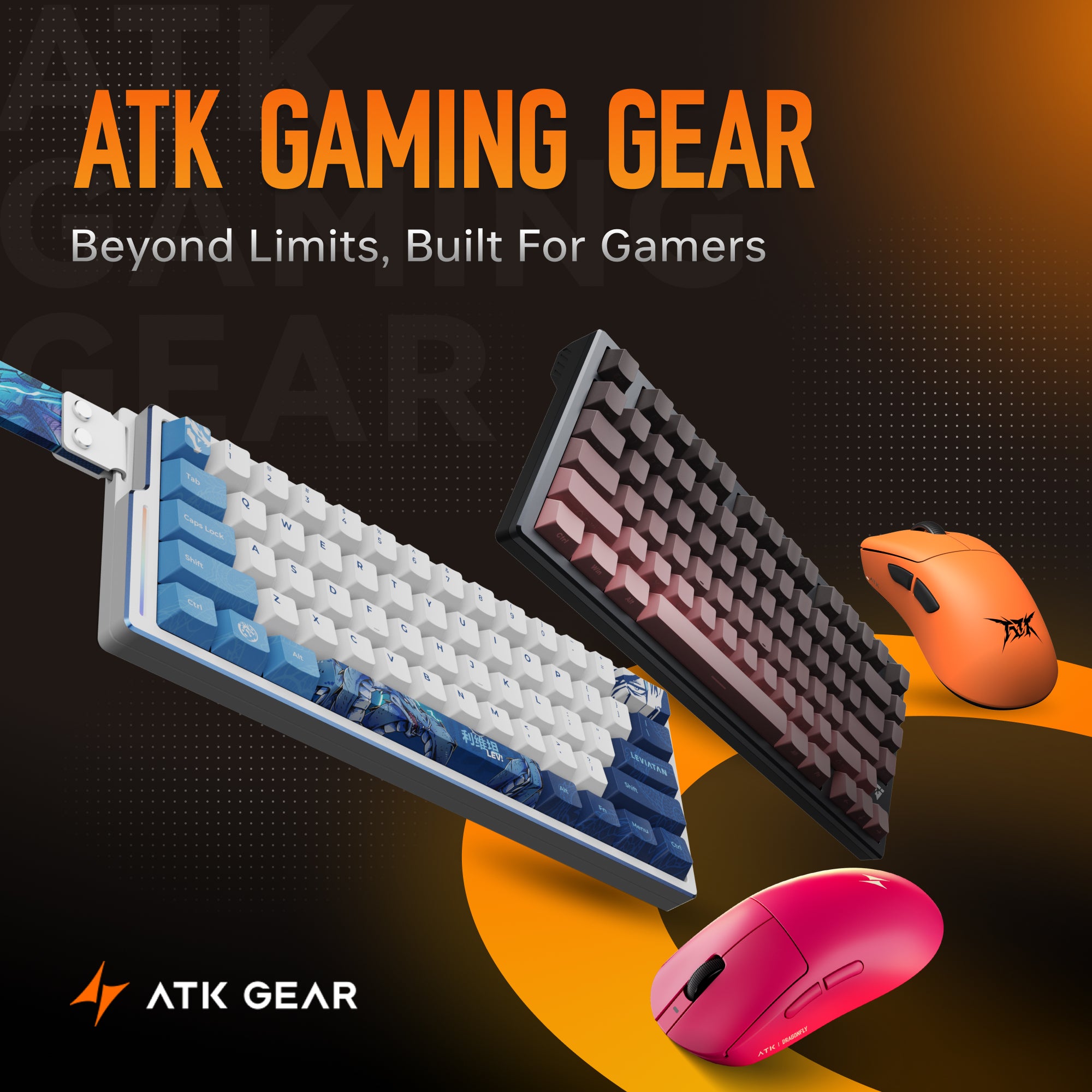
You do not have to spend a fortune to get top-tier tracking performance. Several budget-friendly enthusiast brands offer a highly competitive top gaming mouse equipped with the latest flawless sensors and adjustable motion synchronization. Brands like ATK provide lightweight wireless options that rival premium models at a fraction of the cost, making advanced tracking technology accessible to all gamers.
Software Configuration Best Practices
Once you purchase your mouse, download the official driver software to configure the sensor. Test the mouse with Motion Sync enabled for several matches to let your muscle memory adjust. Then, disable the feature and pay close attention to any differences in responsiveness or visual smoothness. This hands-on testing is the only way to find the configuration that gives you the most confidence during intense shootouts.
Motion Sync: Smooth Tracking with Minimal Latency
Motion Sync is a highly effective sensor technology that balances visual smoothness and tracking consistency. While it adds a microscopic fraction of input delay at standard polling rates, this latency becomes negligible at higher frequencies. Ultimately, deciding whether to keep it enabled depends on your personal preference, monitor refresh rate, and competitive goals. By pairing a high-quality mouse with optimized settings, you can achieve the consistent, pixel-perfect aim required to dominate your favorite games.
Motion Sync FAQs: Latency, Battery, and 8000Hz
What is the difference between Motion Sync and Angle Snapping?
Angle snapping artificially forces your mouse cursor to move in straight horizontal or vertical lines, ignoring small diagonal adjustments. Motion Sync does not alter your trajectory; it simply aligns the timing of your raw, unaltered tracking data with your computer's USB poll cycles, preserving your natural aiming path.
Does turning on Motion Sync decrease wireless battery life?
Yes, enabling Motion Sync can slightly decrease wireless battery life. The feature requires the mouse's internal microcontroller to perform real-time data calculations and alignment before transmission. While the battery drain is minimal, turning the feature off can help extend the time between charges.
Can I use Motion Sync at 8000Hz polling rates?
Yes, you can use Motion Sync at 8000Hz, but it is generally unnecessary. At 8000Hz, your mouse sends data to your PC every 0.125 milliseconds. Because the intervals are already incredibly frequent, polling jitter is naturally eliminated, making the synchronization feature redundant.